
Getting out of jail on bond feels like a lifeline, but it comes with a strict set of rules. Break those rules, and you risk something called bond revocation.
So, what exactly does that mean?
Understanding What Bond Revocation Means for You
Simply put, bond revocation is the court canceling your bail bond. The judge is essentially tearing up the agreement that allowed you to be free while your case is pending.
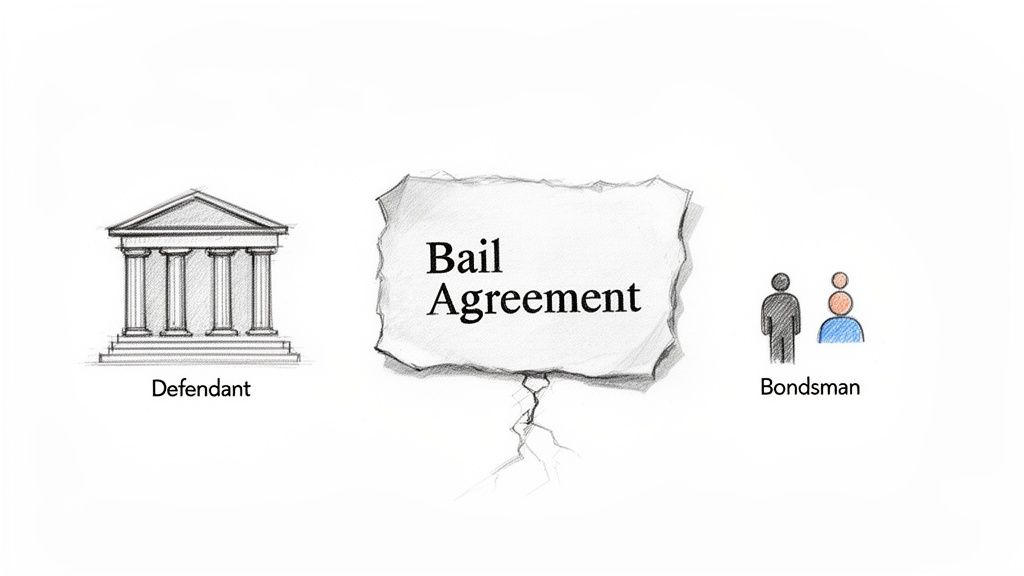
Think of your bail bond as a contract. You promise to show up for court and follow all the rules, and in return, the court lets you stay out of jail. If you fail to hold up your end of the deal, the court can declare that contract void.
This isn't just a slap on the wrist. When a judge revokes your bond, it means they've lost trust in you. A warrant is usually issued for your immediate re-arrest, sending you right back to a jail cell to wait for your trial.
The Key Players Involved
When a bond is at risk of being revoked, three parties find their interests suddenly colliding. Understanding who they are is crucial.
- The Defendant: This is the person who was released on bond and is now accused of breaking the conditions of their release.
- The Court: The judge and legal system set the rules, listen to the evidence of a violation, and make the final call on whether to revoke the bond.
- The Bail Bondsman: As the professional who posted the bond, the bondsman has a major financial stake in making sure the defendant follows the rules and shows up for court.
When a violation happens, the bail bond company might be the first to notify the judge. From there, the court will schedule a hearing to decide what happens next. In the world of bail bonds, this is a make-or-break moment. It can lead to the bondsman's authority to re-arrest the defendant and the forfeiture of the entire bail amount.
To get a better handle on the basics, you can learn more about the difference between bail and bond here.
When a bond is revoked, the trust placed in the defendant by the court is officially broken. It’s a formal declaration that the privilege of pretrial release has been rescinded, often leading to immediate and severe consequences for both the defendant and their cosigner.
To make it even clearer, here's a quick breakdown of who's involved and what's at stake.
Bond Revocation At a Glance
| Component | Role or Consequence |
|---|---|
| Defendant | Faces immediate re-arrest and must remain in jail until their case is resolved. |
| Indemnitor (Cosigner) | May become financially liable for the full bail amount if the bond is forfeited. |
| Bail Bond Company | At risk of losing the full bond amount to the court; has the authority to locate and surrender the defendant. |
| The Court | Issues a bench warrant for the defendant's arrest and presides over the revocation hearing. |
| Outcome | The defendant's freedom is rescinded, and the bail bond agreement is nullified. |
As you can see, the decision to revoke a bond creates a ripple effect, impacting everyone who was part of the original agreement.
The Most Common Reasons a Bond Is Revoked in Georgia
Once someone is out on bond, their freedom isn't absolute. It's conditional. Think of it as a strict agreement with the court—a set of rules that have to be followed to the letter. Break one of those rules, and a judge can yank that freedom right back.
Knowing what triggers a bond revocation is the best way to avoid one. In Georgia, judges don't mess around with bond violations. While any broken rule can land you in hot water, three things are the fastest and most common ways to get your bond revoked and end up back in a Cherokee County jail cell.
Failing to Appear in Court
This is, without a doubt, the number one reason bonds get revoked. When a judge sets a court date, it's not a suggestion—it’s a command. Missing your court date, even if it’s an honest mistake, tells the court you can't be trusted to follow basic orders.
The fallout is immediate. The second you’re a no-show, the judge will almost certainly issue a bench warrant for your arrest. At the same time, your bond is typically forfeited. This puts your freedom on the line and your cosigner's finances in serious jeopardy. National studies have found that a staggering 85% of bond revocations are triggered by this one simple mistake. Local numbers from Cherokee County show the same pattern, where failing to appear is the main reason behind the 15.3% of bail postings that get revoked. You can read more about these pretrial system trends to see just how common this is.
Real-World Example: Sarah was out on bond for a misdemeanor in Canton. She got her dates mixed up and missed her hearing. The judge didn't wait—a warrant was issued instantly, and her bond was revoked. What started as a minor issue quickly snowballed into a major legal headache.
Committing a New Crime
Getting arrested for something new while you're already out on bond is a huge red flag for the court. It sends a clear message that you might be a danger to the community and aren't taking the legal process seriously.
It doesn't matter if the new charge is a minor DUI or a major felony; any new arrest gives the prosecutor a powerful reason to ask the judge to revoke your original bond. The court's thinking is pretty simple: if you can't follow the law while your first case is still open, you're a bad risk for pretrial release. A new arrest is often all it takes to be put back behind bars until both cases are sorted out.
Violating Specific Bond Conditions
Beyond just showing up to court and staying out of new trouble, a judge will almost always set a list of specific, case-related rules you have to follow. Breaking any one of these can get your bond revoked.
These often include things like:
- No-Contact Orders: This is a big one. You're strictly forbidden from contacting the alleged victim or any witnesses. That means no calls, no texts, and no social media messages—even through a third party.
- Failed Drug or Alcohol Tests: If your bond requires you to stay clean and sober, a positive test is a direct violation of a court order.
- Travel Restrictions: You might be ordered to stay within Cherokee County or the state of Georgia. Leaving that approved area without getting the court's permission first is a serious breach.
- Curfews or Monitoring: Some bonds come with a curfew or require you to wear a GPS ankle monitor. Tampering with the device or not being home on time will send an immediate alert to the authorities.
How the Bond Revocation Process Unfolds Step by Step
So, what happens when someone violates their bond conditions? It’s not an instant trip back to jail. There's a formal legal process that has to play out, and understanding the steps can take a lot of the fear and mystery out of the situation. The journey from a simple mistake to a judge's final decision follows a very specific path.
It all starts the moment a violation is reported. This could be a missed court date, a new arrest, or a failed drug test. Once the court is notified that the agreement has been broken, the entire revocation system kicks into gear.
The visual below shows the three most common triggers that get this process started.
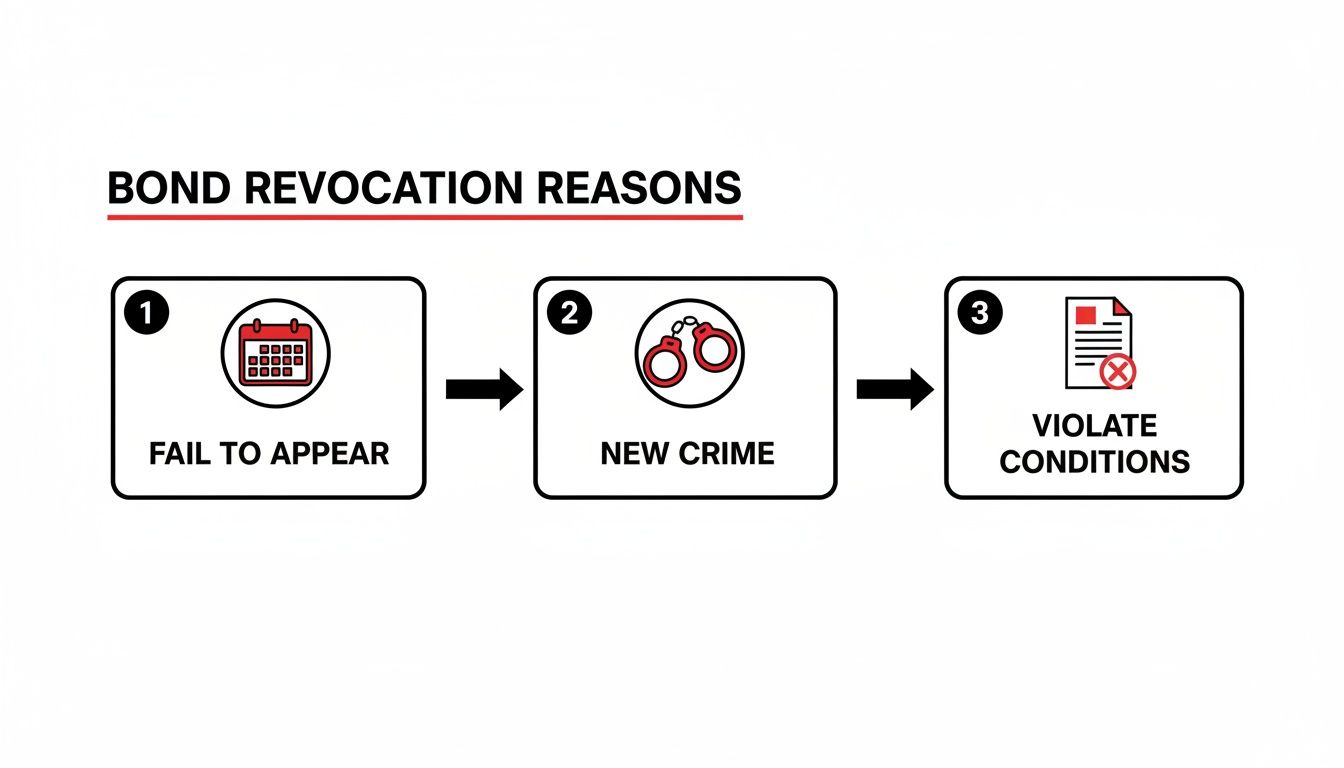
As you can see, failing to show up for court, getting into new trouble, or breaking any of the specific release rules are the primary reasons a judge will take a second look at your bond.
The Initial Report and Motion to Revoke
The first official step is the Violation Report. This isn't just a phone call; it's a formal notification to the court from either the prosecutor's office or the bail bond company. For instance, if you miss a court date, the clerk’s office makes a record of it right away. If you fail a mandatory drug screening, the testing facility reports it.
From there, the prosecutor files a legal document called a Motion to Revoke Bond. Think of this as a formal request asking the judge to cancel your bond and put you back behind bars. This document spells out exactly what violation occurred and why the state believes your freedom should be revoked.
The Bench Warrant and Revocation Hearing
Once the judge reviews the motion, they almost always issue a bench warrant. This is a direct order for any law enforcement officer to arrest you on sight. Unlike a typical arrest warrant, a bench warrant doesn't expire—it stays active until you're back in custody.
A motion to revoke bond is a serious development that can put your release status at risk while the case is pending. Acting quickly to address the alleged violation and present mitigation can be critical to remaining out of jail.
The final stage is the Bond Revocation Hearing. This is your day in court to respond to the allegations, and you'll absolutely want your attorney by your side. This hearing isn't a trial for your original charges; it's a much more focused proceeding to figure out two things:
- Did a violation actually happen? The prosecutor has to show the judge evidence that you broke the rules.
- What should happen next? If the judge agrees a violation occurred, they have options. They can revoke the bond completely, make it more expensive, add stricter conditions like an ankle monitor, or sometimes just issue a stern warning and let the original bond stand.
Knowing this step-by-step process is crucial. It shows that while the situation is serious, it’s not hopeless. There’s a formal procedure in place that gives you a chance to explain your side of the story before any final decisions are made.
Serious Consequences for Defendants and Their Cosigners
A revoked bond is a serious blow, and it doesn't just hit the defendant. It creates a painful ripple effect that pulls in the family and friends who financially backed their release. The fallout is swift, severe, and shared between the defendant and the person who cosigned the bond, known as the indemnitor.
For the defendant, the most immediate consequence is a trip right back to jail. Once a judge signs off on the revocation, a bench warrant is issued for their arrest. This isn't a temporary setback; they will likely be held in custody until their original case is fully resolved, which could be months or even years away.
Losing freedom is just the start. A revocation puts the defendant at a major disadvantage in their legal battle. It sends a clear signal to the judge and prosecutor that they might be a higher risk, which can lead to less favorable plea offers and a tougher stance from the court moving forward.
The Heavy Financial Burden on Cosigners
For the indemnitor—the loved one who signed the contract with the bail bond company—the financial repercussions can be devastating. When you cosign, you're making a legally binding promise that the defendant will show up and follow all the rules. If they don't, you are on the hook for the entire amount.
When a bond is revoked, the cosigner's financial responsibility is activated. They are no longer just a supporter; they are now legally obligated to cover the full bail amount, turning a promise of help into a significant financial crisis.
Once revoked, a process called bail forfeiture kicks in. This means the full amount of the bond is now due to the court. The non-refundable premium you paid to get them out is gone, and the bail bond company will now look to you to cover the entire bond.
The numbers are staggering. Across the U.S., courts forfeit over $1.2 billion in bail bonds each year. Here in Georgia, that number hits $167 million. In Cherokee County alone, 312 revocations in a recent year accounted for $4.8 million—an average of $15,400 per case.
Let's look at how that breaks down in a real-world scenario.
Impact of Revocation on a $20,000 Bond
| Stakeholder | Financial Consequence | Amount Lost |
|---|---|---|
| Cosigner | Non-Refundable Premium (10%) | $2,000 |
| Cosigner | Forfeiture of Full Bond | $20,000 |
| Defendant | New Warrant & Re-Arrest Fees | $500+ |
| Total Combined Loss | $22,500+ |
As you can see, a single mistake turns a manageable premium into a life-altering debt for the cosigner who was just trying to help.
What Happens After Revocation and Forfeiture
If the full bond amount isn't paid, the consequences for the cosigner escalate quickly. The bail bond company has a legal right to recover its losses, and they will take action.
This often involves:
- Demanding full payment: You will be required to pay the entire bond amount right away.
- Civil Lawsuit: If you can't pay, the company can sue you to get a judgment.
- Asset Seizure: With a court judgment, they can legally seize your assets, garnish your wages, or place liens on your property.
It's critical to understand what is bail forfeiture, as it’s the direct financial consequence of revocation. The responsibility is shared, and the stakes are incredibly high, making it essential to stick to all bond conditions without exception.
How a Bail Bondsman Can Help Navigate a Violation
When you’re facing a potential bond violation, your bail bondsman becomes much more than just the person who got you out of jail. They shift into a critical role as an ally, helping you stay compliant and manage the damage if a mistake happens.
Think of them as an ongoing partner, not a one-time service.
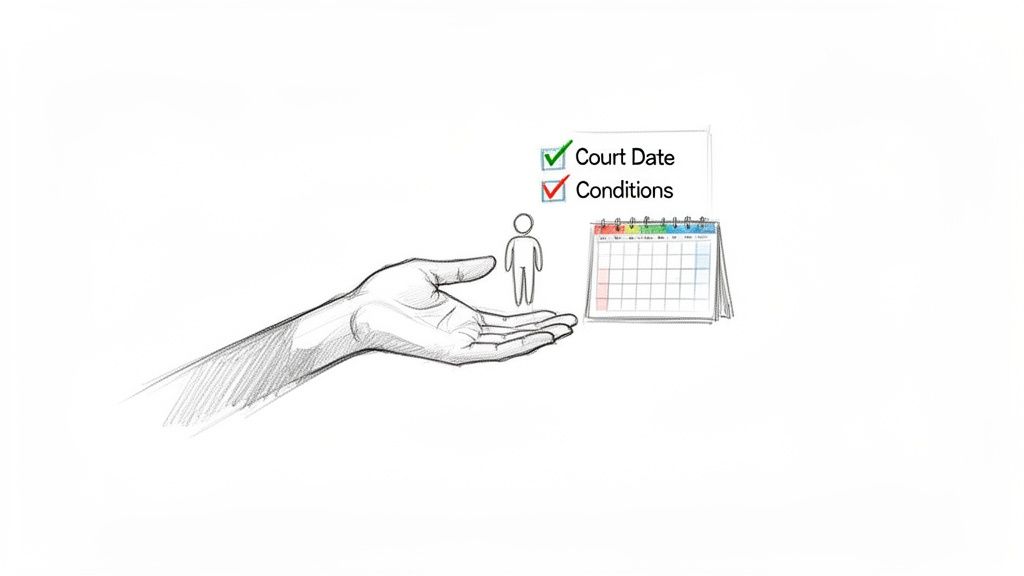
An experienced bondsman knows the pretrial release period is full of potential tripwires. Their goal is to help you meet your obligations successfully—protecting both your freedom and their own financial stake in your case.
Proactive Support to Prevent Violations
The best way to handle a bond revocation is to make sure it never happens in the first place. A professional bail bond company provides essential support to keep you on the right track from the start.
This often looks like:
- Court Date Reminders: Life gets chaotic, and it's surprisingly easy to miss a court date. Many bondsmen will send you a text or call to make sure you never forget an appearance.
- Clarifying Bond Conditions: Legal paperwork is notoriously confusing. Your bondsman can break down complex court orders into simple, clear rules that are easy to follow.
- Open Communication: Having a direct line to your bondsman for questions is a huge relief. It helps clear up confusion before it snowballs into a violation.
Your bondsman is a guide who knows the local court system inside and out. They are a resource you should absolutely use to understand your responsibilities.
A great bail bondsman doesn't just disappear after posting bond. They stick around as an active partner, providing the reminders and answers you need to navigate the system and avoid a costly revocation.
Responding Swiftly After a Violation
If a violation does occur, time is everything. A skilled bondsman can step in immediately to help contain the situation before it spirals. Their experience and relationships within the Cherokee County legal system are priceless at this moment.
One of the most important things a bondsman can do is coordinate a voluntary surrender. Instead of waiting for the police to come find you, your bondsman can arrange for you to turn yourself in. This shows the judge you’re taking responsibility, which can make a huge difference during a revocation hearing.
In some cases, a bondsman might even be able to work with the court to get the bond reinstated before it's fully forfeited. Understanding https://bailbondscherokee.com/what-is-a-bail-bondsman/ and what they do in these critical moments shows their value goes far beyond just getting you out of jail. They become a crucial go-between, working to protect you and your cosigner from the worst consequences.
What to Do When Facing a Bond Revocation Hearing
Getting that notice for a bond revocation hearing feels like the floor just dropped out from under you. It’s a scary, overwhelming moment, but it is absolutely not the end of the road. Panic is a normal reaction, but what you do next is what truly matters. You have a chance to defend yourself.
The most critical thing to understand is that you must act immediately. This isn't a "wait and see" problem. Your first two phone calls are your top priority, and they need to happen now.
- Call Your Criminal Defense Attorney: They are your legal shield and will start building the case to keep you out of jail.
- Call Your Bail Bondsman: We are your partners in this. We can provide guidance and help show the court that you're taking this seriously.
Building Your Defense Strategy
Once your attorney and bondsman are in the loop, the mission shifts to preparing for that hearing. Your goal is to convince the judge that whatever happened was a one-time mistake, not a sign of disrespect for the court's authority.
You and your lawyer will dig into potential defenses or mitigating factors. For example, did you miss court because of a trip to the emergency room? Hospital records can be a powerful defense. Maybe you violated a condition because you genuinely misunderstood a complicated rule. Showing proof that you were trying to comply can demonstrate your good faith.
A bond revocation hearing is your chance to tell your side of the story. It’s not just about what you did, but why you did it. Presenting a compelling reason and a clear plan to get back on track can be the difference between going back to jail and getting a second chance from the judge.
Preparing Your Action Plan
It's time to shift from being reactive to proactive. Sit down with your attorney and create a simple, clear checklist to get ready.
- Gather All Your Evidence: Collect every document, email, text message, or record that backs up your story. No piece of information is too small.
- Document What Happened: Write down a clear, honest timeline of events. Explain any outside factors that led to the violation—a family emergency, a medical issue, a car breakdown.
- Coordinate with Your Bondsman: Talk to us about the possibility of a voluntary surrender if it comes to that. Taking that step shows the court you're cooperative, not trying to run.
Taking these steps shows you respect the court and are committed to following the rules from here on out. This is your fight, and being prepared is how you win it.
Your Questions About Bond Revocation, Answered
When a bond gets revoked, it kicks up a storm of confusion and worry. You’re left scrambling for answers, and you need them fast. This section cuts through the noise to give you clear, straight-up answers to the questions we hear most often.
Think of this as your starting point for getting a handle on the situation. We'll break down the key terms and what they actually mean for you, so you can figure out what to do next.
What's Really Happening? Key Terms and Scenarios
When you're dealing with a bond problem, it's easy to get the legal and financial parts mixed up. Let's clear the air.
What's the difference between bond revocation and forfeiture?
This is a classic point of confusion, but it's simple. Bond revocation is the judge's action—it’s the court officially canceling your pretrial release because a rule was broken. Think of it as the cause.
Bond forfeiture is the financial hammer that drops next—it's the effect. This is when the court demands the full bond amount because the agreement was violated.
Can a revoked bond ever be reinstated?
It's possible, but don't count on it. A judge might agree to reinstate a bond if there was an truly unavoidable, documented reason for the violation, like a sudden medical crisis. But you'll need your lawyer to make a very convincing case, and even then, the decision is entirely up to the judge.
A bench warrant is a standing order for your arrest that does not expire. It remains active in law enforcement systems indefinitely until you are taken into custody or you voluntarily surrender to the court.
The Financial and Practical Fallout
For most people, the money is the most immediate worry—both for the defendant and the person who co-signed the bond.
How long does a bench warrant from a revocation last?
Forever. A bench warrant has no expiration date. It stays active until you are arrested or you turn yourself in. That could be tomorrow, next month, or five years from now, hanging over your head the entire time.
Do I get my premium back if the bond is revoked?
No, the premium you paid to the bail bond company is non-refundable. That fee was earned the moment the bondsman posted the bond and got you released from jail. A bond revocation doesn't change that; the service was already provided.
Facing a bond revocation is a serious mess, but you don’t have to figure it out alone. The team at Cherokee Bail Bonds is here 24/7 to offer real guidance when you need it most. If you or a loved one needs help, call us right now at 770-224-9150 or find more information on our website at https://bailbondscherokee.com.