
When someone misses a required court date after posting bail, it sets off a legal and financial chain reaction known as bail forfeiture. It’s more than just a simple penalty—it's the court's way of keeping the entire bail amount because the defendant didn't hold up their end of the agreement.
Think of it like losing a security deposit on a massive scale. The consequences are immediate and serious for everyone involved.
What Bail Forfeiture Really Means
Posting bail is essentially making a promise to the court, sealed with a significant amount of money. The promise is simple: the defendant will show up for every single court date. Bail forfeiture is what happens when that promise is broken. The court basically says, "You failed to appear, so we're keeping the money." This single action kicks off a whole new set of problems for both the defendant and their co-signer.
This isn't a rare occurrence. The entire bail bond services market in the United States is a massive $3.5 billion industry, with nearly 21,000 businesses dedicated to helping people navigate this very process. When a forfeiture happens, it sends a ripple effect through the entire system.
The Key Players in a Forfeiture Scenario
To really understand what is bail forfeiture, you have to know who gets pulled into the mess. Once a court date is missed, each person has a specific role and a new set of responsibilities.
- The Defendant: This is the person who was released from jail. Their failure to appear in court is what triggers the forfeiture in the first place.
- The Court: The legal body that set the original bail amount and now declares it forfeited. The court will also issue a bench warrant for the defendant’s immediate arrest.
- The Surety (Bail Bonds Company): This is the company that posted the bond to get the defendant out of jail. Now, they are on the hook financially and must pay the full bail amount to the court if the defendant isn't brought back into custody.
- The Co-signer (Indemnitor): This is usually a friend or family member who signed the bail bond agreement, guaranteeing the defendant would appear. They are now legally and financially obligated to repay the full bond amount to the bail bonds company.
One of the biggest misconceptions is that a forfeiture is just another fine. It's not. It’s a complete loss of the entire bond amount—which can easily be thousands or even tens of thousands of dollars—and it starts a domino effect of legal and financial headaches.
For a deeper look at the basics, check out our guide on the difference between bail and a bond.
Here's a quick table to help you see how all the pieces fit together when a forfeiture happens.
Bail Forfeiture at a Glance
| Concept | What It Means | Who Is Affected |
|---|---|---|
| Bail Posted | A financial guarantee is made to the court for the defendant's release. | Defendant, Co-signer, Surety |
| Failure to Appear | The defendant misses a mandatory court date, breaking the bail condition. | Defendant |
| Forfeiture Order | The court officially declares the bail money is now its property. | Defendant, Co-signer, Surety |
| Bench Warrant | An order is issued for the immediate arrest of the defendant. | Defendant |
As you can see, a single missed court date quickly escalates, putting serious pressure on the defendant, their loved ones, and the bail bond agency that helped them.
The Bail Forfeiture Process and Timeline in Georgia
When a defendant misses a court date in Georgia, it isn't just a simple mistake—it kicks off a very specific legal process. Knowing this timeline is critical for anyone who has co-signed a bail bond, especially right here in Cherokee County. It all begins with one event: a Failure to Appear (FTA).
The moment that happens, the promise made to the court has been broken. A judge will immediately issue a bench warrant, which is a live order for the defendant's arrest. This warrant can be served at any time—during a routine traffic stop, at their home, or even at their job. At the same time, the court sends an official notice to the bail bond company, letting them know the bond is now in forfeiture.
This notice starts a countdown, and the clock is ticking for the surety.
The Remission Period: A Race Against Time
Once the bail bond company gets that notice, they don't have to pay the full bond amount right away. Georgia law gives them a grace period, called the remission period, which is a window of opportunity to fix the situation. Here in Cherokee County, this is the bondsman's chance to find the defendant and get them back into custody.
If the defendant is located and surrendered to the jail within this period, the bond can often be reinstated, and the forfeiture can be “cured.” But if that time runs out and the defendant is still missing, the bail bond company is on the hook. They are legally required to pay the entire bond amount to the court.
This graphic breaks down the basic steps, from the day a bond is posted to the day it's forfeited.
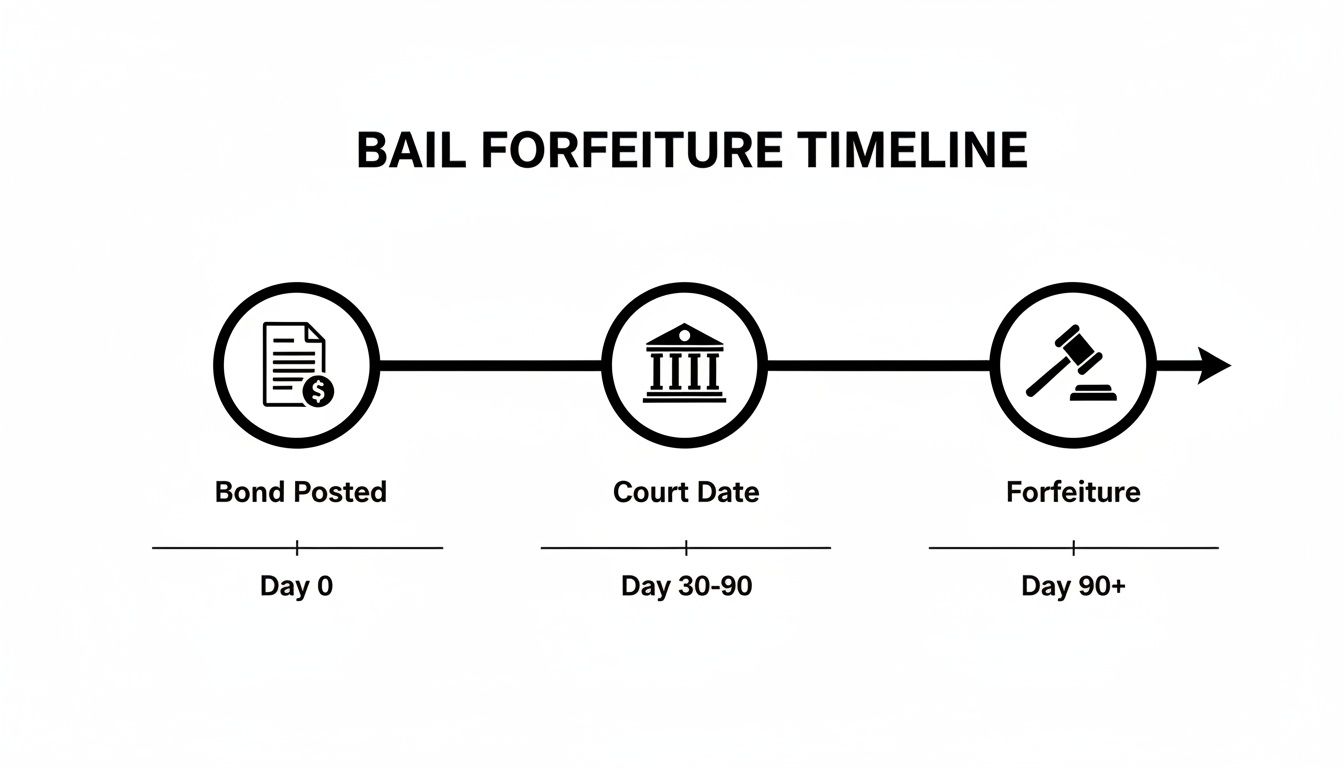
It really shows how a single missed court date can turn a straightforward agreement into a serious legal and financial problem.
The impact of forfeitures often hits those with fewer resources the hardest. Interestingly, research shows that with the right support, court appearance rates can be as high as 92%, which keeps people from being locked up unnecessarily. This is a big contrast to what can happen in traditional bond situations where one mistake leads to massive financial penalties.
A bail forfeiture isn't just a fee; it's a formal legal process with a strict timeline. From the second that court date is missed, the clock starts running for the bondsman and the co-signer, making every single day count.
The fallout from missing court here in our area is significant. To get a better sense of the immediate repercussions, you can learn more about what happens if you miss court after posting bail in Cherokee County. The whole process highlights just how important communication and responsibility are for everyone involved.
The Severe Consequences for Defendants and Co-Signers
When a bail bond is forfeited, it’s not just a minor legal slip-up. It sets off a chain reaction of serious and lasting problems for both the defendant and the person who co-signed the bond. This is a major event with immediate financial and legal fallout that can completely upend lives.
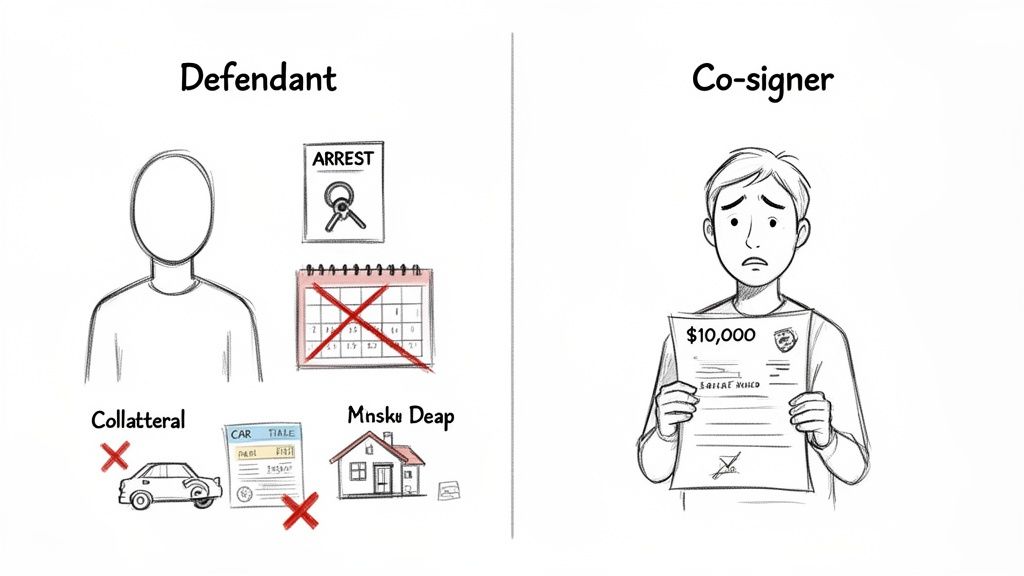
For the defendant, a forfeiture means their legal troubles just got a whole lot bigger. The original court case doesn’t just go away—it gets worse.
Repercussions for the Defendant
A defendant who doesn’t show up for court is walking into a harsh new reality. The judge immediately issues a bench warrant for their arrest, officially making them a fugitive from the law. That warrant means any encounter with police, even a routine traffic stop, will end with them back in jail.
On top of that, the defendant will almost certainly face a new criminal charge for Failure to Appear (FTA). This is a separate crime with its own fines and potential jail time, piling on top of their original legal issues. Any collateral they used to secure the bond—like a car title or property—is now on the line and can be seized to pay for the forfeited bond.
The biggest long-term hit is often to the defendant's reputation. A bail forfeiture goes on their permanent record, making it incredibly difficult, and sometimes impossible, to ever get another bail bond.
The Crushing Weight on the Co-Signer
While the defendant is facing more jail time, the co-signer is staring down a direct and immediate financial emergency. By signing that bail bond agreement, the co-signer (also called the indemnitor) made a legally binding promise that the defendant would show up for court.
When that promise is broken, it instantly turns into a massive debt. The bail bond company has the legal right to collect the full bond amount from the co-signer.
- Financial Liability: If the bond was for $10,000, the co-signer is now on the hook for paying that entire amount.
- Legal Action: The bonding company can take the co-signer to civil court to collect the money. This can lead to things like wage garnishment or liens on their property.
- Credit Damage: Not paying this debt can wreck a co-signer's credit score for years to come.
This financial responsibility can be absolutely devastating for families. It's why understanding what are the responsibilities of a cosigner before you sign anything is so incredibly important.
The consequences of a bail forfeiture are severe, but they hit the defendant and the co-signer in very different ways. Here's a quick breakdown of who is responsible for what.
Consequences of Bail Forfeiture: Defendant vs Co-signer
| Consequence | Impact on Defendant | Impact on Co-signer (Indemnitor) |
|---|---|---|
| Legal Status | Becomes a fugitive with an active arrest warrant. | No new criminal charges, but faces civil legal action. |
| New Charges | Faces a new criminal charge for Failure to Appear (FTA). | Not subject to new criminal charges. |
| Financial Cost | Loses any collateral put up for the bond. | Becomes legally responsible for the entire bail amount. |
| Future Bail | Finds it extremely difficult or impossible to get a bond again. | May have difficulty co-signing for a bond in the future. |
| Credit Impact | The criminal record is the primary negative mark. | Credit score can be severely damaged by the civil debt. |
Ultimately, while the defendant faces the loss of their freedom, the co-signer bears the full weight of the financial burden, a risk they accepted when they signed the agreement.
How to Prevent or Resolve a Bail Forfeiture
That sinking feeling you get when you realize a court date was missed is stressful, but it's a problem that can be solved. The key, whether you're trying to prevent a forfeiture or fix one that’s already happened, is taking immediate action.
The best-case scenario is always stopping a forfeiture before it starts. A few simple, proactive steps can make all the difference and ensure you meet every court obligation without a hitch.
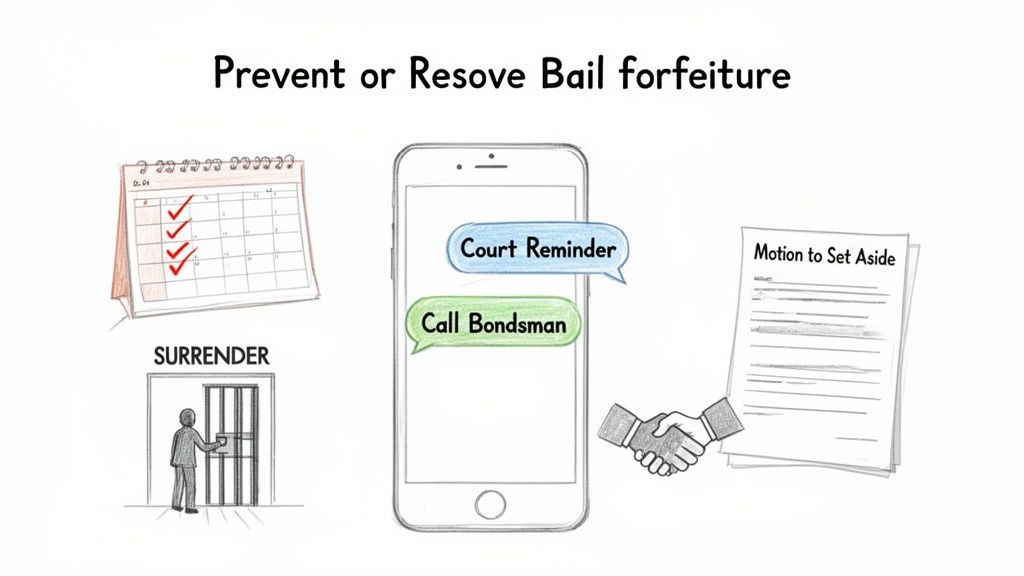
Proactive Steps to Prevent Forfeiture
The number one rule in preventing a bail forfeiture is communication. Life happens. A sudden illness, a car accident, a family crisis—these things can get in the way of a court date. If something comes up, your first call should be to your bail bondsman and attorney.
Here are a few practical measures that work:
- Stay in Touch: Keep your bondsman updated. If your phone number, address, or job changes, let them know right away. They can't help if they can't reach you.
- Master Your Calendar: Double and triple-check every single court date. Put reminders in your phone, on a physical calendar—whatever it takes to make sure you don't forget.
- Report Problems Immediately: If you get a flat tire on the way to the courthouse or end up in the emergency room, call your bondsman and lawyer on the spot. A quick phone call can often prevent the situation from spiraling.
What to Do If a Forfeiture Happens
So, a court date was missed and a forfeiture notice is issued. Don't panic, but you absolutely have to act fast. There are clear, established ways to "cure" the forfeiture and get things back on track. It all comes down to showing the court a good-faith effort to comply.
There are two main ways to resolve an active forfeiture:
- Surrender the Defendant: The most direct way to stop the clock is for the defendant to voluntarily surrender at the Cherokee County jail. This single act demonstrates to the court that the failure to appear wasn't an attempt to run, which goes a long way toward getting the bond reinstated.
- File a Motion to Set Aside: An attorney can file a legal motion asking the judge to cancel the forfeiture. This is often successful when there’s a legitimate, provable reason for the missed court date, like a documented medical emergency.
It’s important to remember that a bail forfeiture isn't just a personal issue; it's part of a much larger system. Forfeitures are a major revenue stream for government programs. For instance, the Crime Victims Fund currently holds over $3.5 billion, a significant portion of which comes from forfeited bail bonds. You can discover more about how this fund operates. This financial reality is why courts enforce forfeiture rules so strictly, making a swift resolution absolutely essential.
How Cherokee Bail Bonds Helps You Avoid Forfeiture
Navigating the court system is stressful enough without the added fear of a bail forfeiture. At Cherokee Bail Bonds, we don’t just get people out of jail—we see ourselves as a partner in helping you manage your case from beginning to end. Our real value kicks in long after the bond is posted.
From day one, our mission is to cut through the confusion that so often causes people to miss court dates. We believe proactive communication is the single best way to prevent a forfeiture.
Proactive Support and Constant Communication
We don’t post a bond and then disappear. Instead, we take active steps to make sure you know exactly where you need to be and when. A simple mistake shouldn't turn into a life-altering legal problem.
Our support includes:
- Court Date Reminders: We send out clear, consistent reminders for every court appearance through text messages and phone calls, so a date never slips through the cracks.
- Clear Explanations: We take the time to walk you through your obligations and make sure you understand every single condition of your release. No legal jargon, just straight answers.
- 24/7 Availability: Questions pop up. Emergencies happen. Our licensed bondsmen are on call around the clock to give you answers and help you handle any unexpected issues.
We get it—life is unpredictable. If a car accident or a sudden illness keeps you from making it to court, our immediate availability means we can help you take the right steps to notify the court and your attorney. Often, this is enough to prevent a forfeiture before it even starts.
Local Expertise When It Matters Most
If a forfeiture does happen, our deep roots in the Cherokee County court system become your most important asset. We have a proven process for getting these situations resolved quickly and effectively.
We work directly with the courts to file the necessary motions to get the bond reinstated. We'll also coordinate with your lawyer to make sure everyone is on the same page.
Our team knows the local procedures and people in Canton, Woodstock, and all across the county. This local knowledge helps us turn a potential disaster into a manageable problem. When you choose Cherokee Bail Bonds, you’re not just buying a release from jail—you’re getting a dedicated ally focused on helping you avoid forfeiture and successfully close your case.
Your Questions About Bail Forfeiture, Answered
When you're dealing with a forfeited bail bond, a lot of questions pop up. It’s a stressful situation, and you need straight answers to figure out your next steps. Here are some of the most common questions we get from clients every day.
Our goal is to cut through the legal jargon and give you the clear, practical information you need.
What If I Accidentally Missed My Court Date?
Life happens. A sudden car accident, a medical emergency, a legitimate, unavoidable reason for missing court—it's not unheard of. But you have to act immediately.
The moment you realize you missed your date, call your bail bonds company and your lawyer. The goal is to prove to the court that your absence wasn't deliberate. We can guide you on getting the right documentation to the court to hopefully get the warrant recalled and the forfeiture reversed. Don't wait—time is absolutely critical here.
Do I Get My Premium Back If Bail Is Forfeited?
No, the premium paid to a bail bond company is a non-refundable fee. Think of it as payment for the service of getting the defendant out of jail and for the massive financial risk we take on your behalf.
Once bail is forfeited, that premium is not returned. On top of that, the co-signer is now on the hook for the entire bond amount that we have to pay the court.
It's a common mistake to think bail forfeiture is just another penalty fee. The reality is much harsher: it’s a complete loss of the entire bond amount, and it kicks off a new round of serious financial and legal problems for everyone involved.
Does Leaving the State Automatically Forfeit My Bail?
Absolutely, yes. Leaving Georgia without getting explicit permission from the court is a major violation of your bond conditions. It will almost certainly trigger an immediate forfeiture of your bail.
The court doesn't take this lightly and will issue a new warrant for your arrest on the spot. All travel restrictions must be followed to the letter. If you have a true emergency that requires you to travel, your attorney must get court approval before you go anywhere. Unauthorized travel is seen as a serious breach of trust.
Trying to make sense of the legal system can feel impossible, but you don’t have to go through it alone. If you have more questions about bail forfeiture or need help right now in Cherokee County, Cherokee Bail Bonds is here for you 24/7.
Give us a call at 770-224-9150 or learn more about how we can help at our Cherokee Bail Bonds website.