
An outstanding warrant in Georgia is a serious legal order from a judge that gives law enforcement the authority to arrest you. These things don't just disappear over time; they're usually issued when someone misses a court date (a bench warrant) or as part of a criminal investigation (an arrest warrant).
Demystifying Warrants in Georgia
There’s a unique kind of dread that sets in when you think there might be a warrant out for your arrest. Every police cruiser you pass seems to slow down, and you start imagining a simple traffic stop turning into a trip to jail.
That feeling of uncertainty is exactly why you need to understand what you're up against. A warrant isn't just a piece of paper; it’s a direct command that puts every officer in the state on alert. It’s an official document, signed by a judge, giving police the green light to take you into custody. Ignoring it is the worst thing you can do, because warrants stay active until they are properly handled.
The Two Main Types of Warrants
Not all warrants are the same. In Georgia, you’re almost always dealing with one of two types, and knowing the difference is key.
Arrest Warrants: These are issued when police convince a judge there’s probable cause you've committed a crime. This often happens behind the scenes during an investigation, so the warrant might be the first time you learn you're a suspect.
Bench Warrants: These come straight from a judge (from "the bench") when someone doesn't follow a court order. By far, the most common reason is missing a court date. If that's your situation, our guide on what to do if you missed your court date is a must-read.
The distinction really does matter. Both types will get your name flagged in law enforcement databases like the Georgia Crime Information Center (GCIC), but how you go about clearing them can be very different.
A lot of people think a warrant for a small issue will just fade away. That’s a dangerous myth. Warrants never expire, and any run-in with the police—even for a busted taillight—can end with you in handcuffs.
The state takes executing these documents very seriously, regardless of the underlying charge. For a sense of scale, the Georgia Bureau of Investigation's January 2026 Statistical Report details a massive operation where multiple warrants led to one of the biggest drug and firearm busts in recent metro Atlanta history. You can read the official GBI report to see how these operations unfold. It just goes to show that whether it's for a missed traffic ticket or a major felony, a warrant is a powerful legal tool.
How to Perform a Warrant Search in Georgia
The feeling of not knowing if you have an outstanding warrant is incredibly stressful. The good news is that you have options for finding out for sure. Taking that first step—confirming whether a warrant exists—is the only way to regain control and start working toward a resolution.
How you go about this depends on your comfort level and the county you’re dealing with. Let's walk through the most common ways to check.
Comparing Methods for a Georgia Warrant Search
Every approach to a warrant search has its upsides and downsides. What works best for one person might not be the right fit for another, especially when you're balancing speed, cost, and privacy.
| Method | Where to Check | Potential Cost | Anonymity Level |
|---|---|---|---|
| Online County Search | County sheriff's office or clerk of court websites | Free | High |
| Contacting Officials | Calling or visiting the county sheriff's office or clerk of court | Free | Low |
| Third-Party Service | Commercial background check websites | Varies | High |
| Contacting a Lawyer | A criminal defense attorney's office | Varies | High |
| Bail Bondsman Inquiry | A licensed bail bond company like Cherokee Bail Bonds | Free | High |
Choosing the right method is about evaluating what matters most to you. For a quick, private check, online databases or third-party services are great starting points. But for definitive, up-to-the-minute information, you'll need to go through official channels or trusted legal professionals.
Official Channels for Warrant Information
The most reliable way to get a straight answer is by going directly to the source. A warrant is a legal document issued by the court and executed by law enforcement, so those are the two places you'll want to check.
Your main points of contact are usually:
- The County Sheriff’s Office: The sheriff's department is in charge of serving warrants, so their records division is a primary resource. You can often call or visit in person.
- The Clerk of Court: Since this office handles all court records, including the initial warrant filing, they can confirm if one has been issued by a judge for your case.
When you reach out, you’ll need to provide a full name and date of birth. This is where a lot of people get nervous, because it means giving up your anonymity. But it's also the most direct path to getting the facts.
The In-Person Requirement in Major Counties
Don't assume the process is the same everywhere. Some of the bigger metro counties have very specific rules you need to follow.
Take Fulton County, for instance. Their Sheriff's Office handles an enormous number of warrants—over 21,000 in an average year. Because of this massive volume and their security protocols, they simply will not give out warrant information over the phone. If you need to check for a warrant there, you have to go to the Fulton County Sheriff's Office in person. This really shows how much procedures can differ from one county to the next.
Pro Tip: Before you drive to any government building, make a quick call to confirm their hours for public records requests. It’s a simple step that can save you a ton of time and a wasted trip.
A Focus on Cherokee County
If you live in Canton, Woodstock, or anywhere else in Cherokee County, the process is much more local and direct. Your best bet is to contact the Cherokee Sheriff’s Office.
While a phone call might get you some information, showing up in person at their records division is the most certain way to get clear answers. This is also the perfect time to ask about the charge behind the warrant and what the bond amount has been set at. It can feel intimidating, but the staff are just doing their job providing public records.
By the way, if you’re also looking for arrest records, we have a helpful guide on how to perform a Cherokee County, Georgia jail inmate search.
Finding out about a warrant isn't just about collecting information. It’s about arming yourself with the facts so you can make a smart plan and move forward.
The Hidden Consequences of an Unresolved Warrant
Having an outstanding warrant in Georgia is more than just a legal problem hanging over your head. It's a silent obstacle that can actively block your progress in life, often in ways you don't see coming until it's too late.
The most obvious risk, of course, is being arrested during a routine traffic stop. But the consequences run much deeper than that, creating serious roadblocks in your personal and professional life.
This isn't just about avoiding a night in jail. An active warrant can instantly derail your future plans. Let's say you just landed a fantastic new job offer. You nailed the interview, and they’re ready to hire you, but the last step is a standard background check. A warrant, even for something minor like a missed court date for a traffic ticket, will pop up.
Suddenly, that job offer is pulled, often without any explanation.
A Domino Effect on Your Daily Life
The trouble doesn't stop with a lost job opportunity. That warrant acts like a giant red flag in any system that runs a background screening—and in today's world, that's almost everything.
- Driver's License Suspension: The Georgia Department of Driver Services can and will suspend your license for a "failure to appear" in court. You could be driving on a suspended license without even realizing it, turning a simple stop into a much more serious charge.
- Housing Applications: Thinking of moving? Landlords and property management companies run background checks on every applicant. An active warrant is one of the fastest ways to get your rental application denied, making it incredibly hard to find a safe place to live.
- Professional Licenses: If you work in a field that requires a state license—like nursing, real estate, or commercial driving—an unresolved warrant can put your credentials and your entire career on the line.
These aren't just "what-if" scenarios. We see this happen every single day. A simple bench warrant for an unpaid ticket can snowball, preventing you from getting a job, securing an apartment, or even legally driving to work.
The real danger of an outstanding warrant isn't just the arrest itself. It's the silent, ongoing disruption it causes, effectively putting your entire future on hold until you deal with it.
The Inevitable Encounter with Law Enforcement
Sooner or later, every outstanding warrant leads to an encounter with the police, and it almost never happens at a good time.
You could be on your way to a family wedding, heading out on vacation, or just running to the store when a broken taillight suddenly turns into a trip to the Cherokee County jail.
This element of surprise is what makes unresolved warrants so stressful and damaging. Instead of handling the situation on your own terms, you're forced into the system unexpectedly. It creates immense stress for you and your loved ones. The only way to stop this domino effect is to face the problem head-on and take the steps to clear your name.
That sinking feeling you get when you discover there’s a warrant out for your arrest is tough, but it's a problem you can solve. Instead of just waiting around for the inevitable knock on the door, you can actually get out in front of this. Trust me, taking control of the situation is always the best move.
When you face the issue head-on, you're setting yourself up for a much better outcome than if you get caught during a traffic stop. By taking the initiative, you’re sending a clear message to the court that you're taking this seriously, which can make a real difference in how your case is handled right from the start.
An active warrant isn't just about the risk of arrest; it quietly messes with your life in other ways.
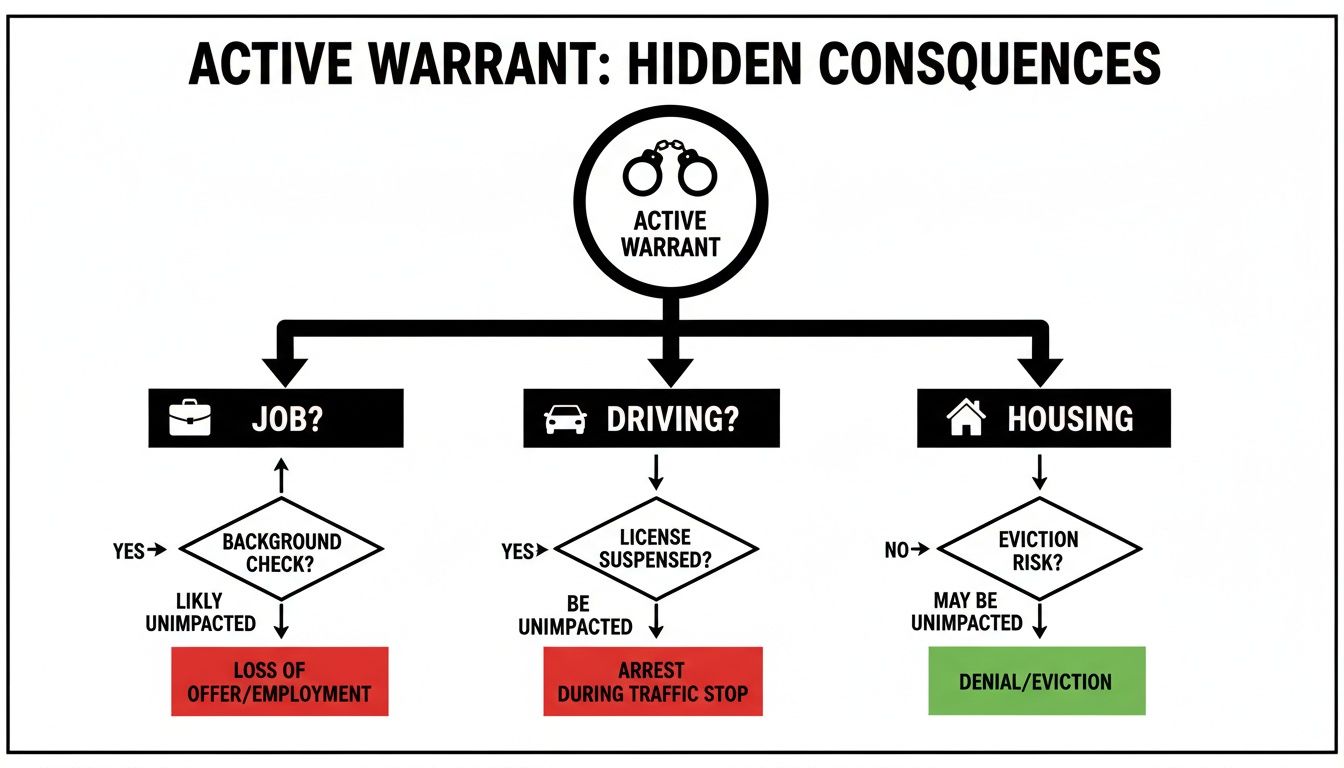
The reality is that an unresolved warrant can create a domino effect, impacting your job, your driver's license, and even your ability to rent a home.
The Power of a Proactive Surrender
The smartest way to handle a warrant is through what’s called a "walk-through" booking. This isn't about just showing up at the jail and hoping for the best. It’s a planned process that dramatically cuts down on the uncertainty and, most importantly, the time you spend in a cell.
By arranging your surrender, you get to choose the time and place. This helps you avoid the public embarrassment of being arrested at home or, even worse, at your job. It shows respect for the legal system and immediately sets a cooperative tone for your case.
This is where a solid plan makes all the difference.
Partnering With a Bail Bondsman First
Before you even think about turning yourself in, your very first call should be to a licensed bail bondsman. This is, without a doubt, the most important step you can take to keep your time behind bars to an absolute minimum. A good bondsman does a lot more than just post your bail—they act as your guide through a confusing system.
Here's what a bail bond company can do for you before you surrender:
- Pre-Arrange Bail: We can get all the necessary paperwork filled out and ready to go ahead of time. That means the second you’re processed, the bond can be posted. No waiting.
- Provide Clear Guidance: An experienced local bondsman knows the Cherokee County Adult Detention Center inside and out. We can tell you what to expect, what (and what not) to bring, and the best times to turn yourself in for the fastest processing.
- Offer Confidential Support: We can discreetly verify the warrant details and find out the bond amount for you. This gives you the information you need to make a plan without tipping anyone off.
Prosecutors and judges almost always look more favorably on people who voluntarily surrender. It shows you’re ready to face the music, not run from it.
When to Bring in an Attorney
While a bail bondsman is your ticket out of jail, a criminal defense attorney is your key to fighting the actual charge. If you’re dealing with a serious offense or you think the warrant was a mistake, getting an attorney involved is non-negotiable.
An attorney can sometimes file a motion to have a bench warrant recalled, which could let you handle the issue without ever setting foot in a jail cell. They'll represent you in court, look for holes in the evidence, and negotiate for you. When the stakes are high, their expertise is priceless.
How a Bail Bondsman Helps You Navigate the Process
Discovering you have an outstanding warrant in Georgia can feel isolating, but you don't have to face the legal system alone. A professional bail bondsman is much more than a financial service—they are your guide through a stressful and confusing process. This is especially true when dealing with local courts in Cherokee County, from Canton to Woodstock.
The moment you call a bondsman, you get an advocate on your side. Their main job is to secure your release as quickly as possible. This lets you handle your legal matters from home, not from a jail cell, minimizing the disruption to your life, job, and family.
Your First Call for Support and Action
It all starts with a single, confidential phone call. At Cherokee Bail Bonds, our licensed agents are available 24/7 because we know legal troubles don't stick to a 9-to-5 schedule. During that first conversation, we gather the necessary information to act fast.
We immediately get to work verifying the warrant details and confirming the bond amount set by the court. This crucial step provides clarity and sets the stage for a smooth release. Think of us as your first line of defense, handling the logistical legwork so you can focus on what's next. For more on this role, check out our guide on what a bail bondsman does.
Deep Knowledge of the Local System
Every county in Georgia has its own procedures, and that local knowledge is invaluable. An experienced bondsman has built relationships and a deep understanding of how the Cherokee County Adult Detention Center operates. This familiarity is a huge advantage.
We know the ins and outs of the local system:
- Fast-tracking paperwork to ensure it's filed correctly and promptly.
- Advising on the best times to turn yourself in to minimize processing delays.
- Explaining what to expect during the booking and release process, which helps remove the fear of the unknown.
This insider knowledge means we can help you avoid common mistakes that might otherwise keep you in custody longer than necessary.
A good bail bondsman doesn’t just post a bond; they provide a clear roadmap for what's ahead. This guidance is essential for making informed decisions during a high-stress time and ensuring the process is handled with privacy and dignity.
Ultimately, our role is to be your steadfast partner from the moment you call until your case is resolved. We simplify the complexities of the system, answer your questions honestly, and work tirelessly to secure your freedom. This support can turn a daunting experience into a manageable one.
Common Questions We Hear About Warrants
When you're dealing with the stress of a potential warrant, a lot of questions come up. Even after you get the basics down, you’re still left wondering about the specifics of your situation. Here are some straightforward answers to the questions we get asked most often.
People often ask if they can just pay a fine and make a warrant disappear. It's a nice thought, but for most warrants, it's just not that simple. If it's a bench warrant for a Failure to Appear (FTA), which is very common, you have to deal with the court case itself. You can't just pay it away.
Another big question is whether a warrant just goes away on its own after a while.
That’s a hard no. An outstanding warrant in Georgia never expires. It doesn’t have a statute of limitations and will stay active until you're arrested or you take steps to clear it. It will follow you—indefinitely.
This is why ignoring it is the worst thing you can do.
Can I Travel Out of State With a Warrant?
This is one of the most dangerous myths we hear. Believing a Georgia warrant is only a problem in Georgia can get you into serious trouble. If you have an active warrant, any police interaction in another state—even a simple traffic ticket—can end with your arrest.
Now, Georgia might not spend the money to extradite you back for a small misdemeanor, but they absolutely can. If it's a felony warrant, you can bet they will. Your warrant is listed in the National Crime Information Center (NCIC) database, which every cop in the country can see. Traveling with a warrant is a huge gamble.
Do I Really Need a Lawyer to Handle This?
Technically, you can try to resolve a warrant on your own, but we strongly advise against it. Going it alone means trying to navigate a complicated court system without any legal training. Your chances of getting a good outcome, like a reasonable bond, drop significantly.
A good lawyer knows how to talk to the court. They can often get a bench warrant recalled or arrange for a voluntary surrender, which looks much better to a judge. They understand the right arguments to make to get you released quickly while protecting your rights. Trying to wing it by yourself can easily mean more jail time and tougher penalties.
If you've found out there's a warrant for your arrest and need to prepare for a voluntary surrender, you don’t have to go through it by yourself. Cherokee Bail Bonds is here 24/7 with fast, private, and professional service to help you post bond and get you out of custody as quickly as possible. Contact us now at https://bailbondscherokee.com to get the help you need, right away.