
That moment of silence when you can't reach a loved one is pure dread. Your mind immediately jumps to the worst-case scenario, and the thought, "Are they in jail?" is often right there. If you're in that situation, the fastest way to get an answer is to check the local county jail's online inmate search portal. This is almost always where a person is taken immediately after an arrest.
Your First Steps to Locating Someone in Custody
Feeling lost and confused is completely normal. When you can't get ahold of someone and suspect they've been arrested, your mind races with questions, but finding answers feels like an impossible task. This guide is designed to cut through that confusion and give you a clear, immediate plan to get the clarity you need.
It's important to understand why there isn't one single, universal database for finding inmates. The U.S. has a massive and fragmented incarceration system, with nearly 2 million people held across thousands of different facilities—federal, state, local, and tribal. This means no central search tool exists, which is why your search should always start at the local level.
Gathering the Essential Information
Before you even open a web browser, your first move is to gather a few critical pieces of information. Trying to search with just a nickname or an approximate age will almost always lead to a dead end and more frustration.
To get a quick, accurate result, you'll need a few key details. The more information you have, the better your chances are of locating your friend or family member on the first try.
Here’s a quick breakdown of what you need and why it's so important.
Essential Information for Your Inmate Search
| Information You Need | Why It Matters | Where You Can Find It |
|---|---|---|
| Full Legal Name | This is the primary search field. It must match their legal documents, including any middle names or initials. | Driver's license, old mail, social media profiles, or by asking other family members. |
| Date of Birth (DOB) | This is the most crucial identifier to distinguish them from others with a similar name. | The same sources as their full name. It's a key piece of personal identifying information. |
| Recent Location | Knowing the city or county where they were last helps you search the correct local jail's roster first. | Their last known whereabouts, information from mutual friends, or phone location data if available. |
Having these details ready will make the entire process significantly smoother and less stressful. It's the difference between a five-minute search and a five-hour headache.
This quick decision tree gives you a visual path for your initial steps.
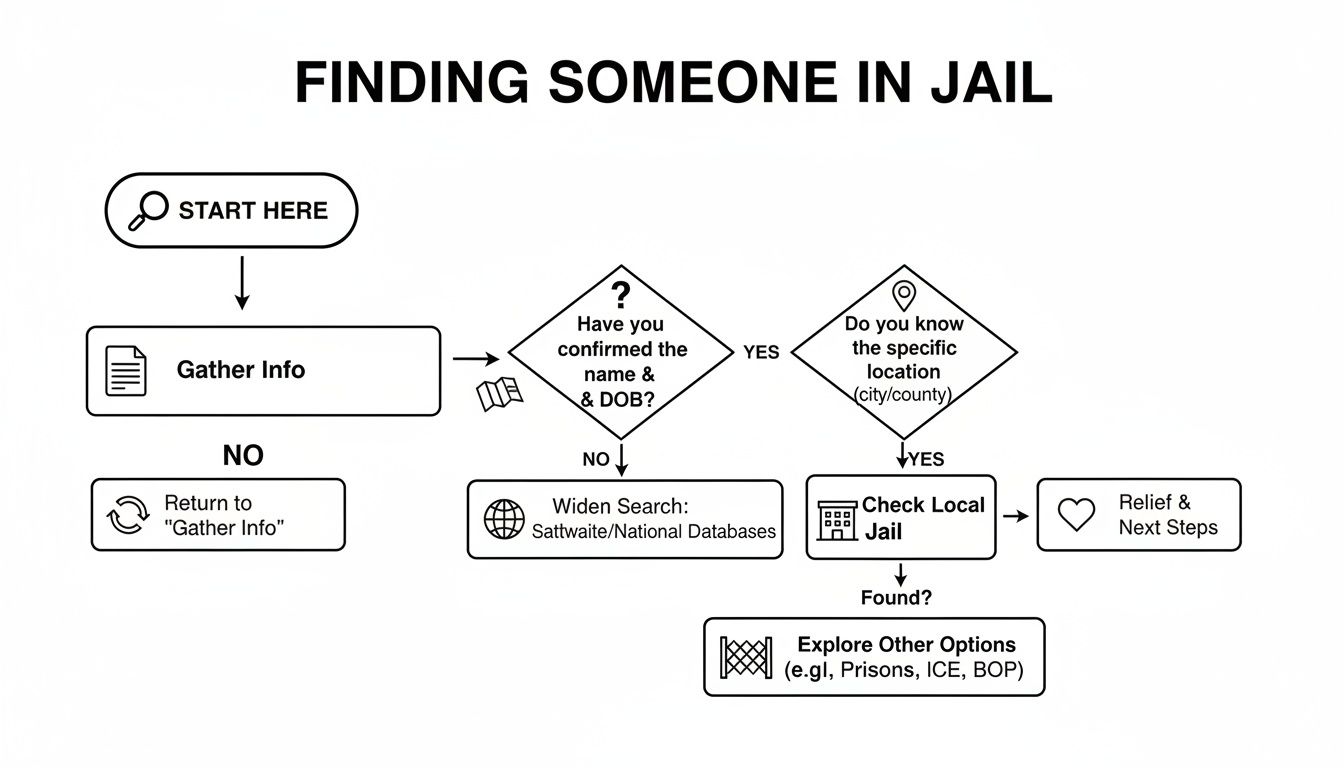
As the flowchart shows, once you have the basic information, your most direct route is to check with local law enforcement—specifically, their jail roster.
Key Takeaway: The most effective search always starts local. The overwhelming majority of arrests result in a person being booked into a county jail, not a state or federal prison. For residents in our area, this means the Cherokee County Adult Detention Center is the logical starting point.
This situation is incredibly stressful, but there is a clear path forward. For a deeper dive into the next steps after you confirm their location, check out our guide on what to do when someone gets arrested. Our goal is to give you the knowledge to act swiftly and confidently during a difficult time.
Once you have the right information, your best bet for finding someone quickly is to go online. Gone are the days of endless phone calls; almost every county and state agency now has a digital database that makes the whole process much more straightforward.
The key is to start local and work your way out.
Start with Local and State Inmate Searches
For anyone in our area, the first place you should always check is the Cherokee County Adult Detention Center’s online search portal. This is the official source, updated directly from the jail's own booking system, so the information you find here is as current as it gets.
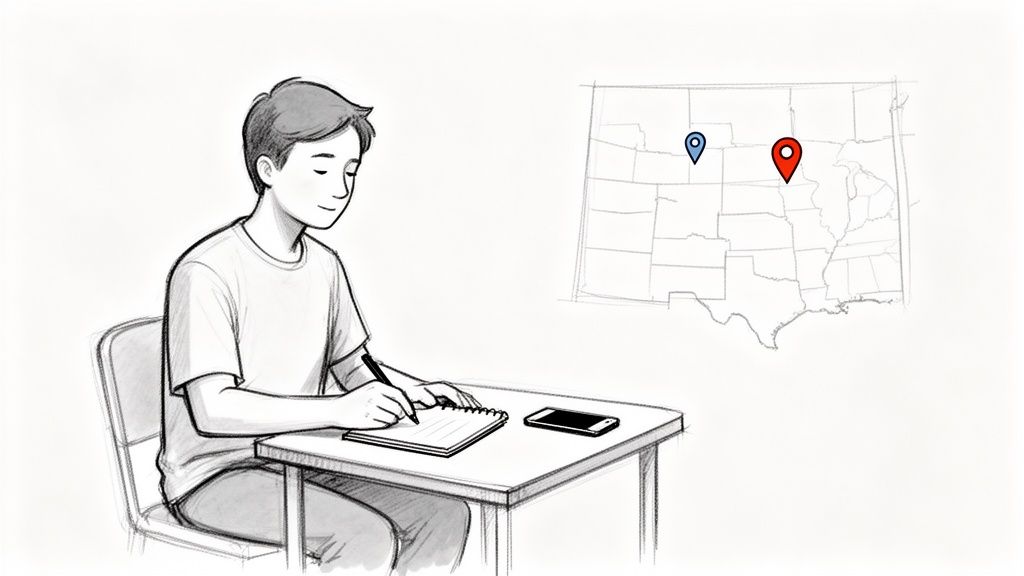
When you look someone up on an official portal like Cherokee County's, you'll get more than just a simple "yes" or "no." It gives you a detailed snapshot of their status, which is incredibly helpful.
Typically, you can expect to find:
- A recent mugshot from when they were booked.
- The specific charges they're facing.
- The bond amount, if the court has set one.
- A unique booking or inmate ID number, which you'll need for just about everything moving forward.
If you search the county site and come up empty, don't panic. The person might have been transferred or could be held on state charges. The next logical place to check is the Georgia Department of Corrections (GDC) Offender Query. This database is for people who've already been sentenced to a state prison, so it's a good resource if some time has passed since the arrest.
Broaden Your Search with National and Third-Party Tools
In some rare cases, a person could be in federal custody. If you have any reason to believe the charges are federal, the official tool to use is the Federal Bureau of Prisons (BOP) Inmate Locator. This covers every federal facility across the country.
Beyond government websites, one of the most useful tools out there is VINElink (Victim Information and Notification Everyday). VINE is a nationwide service that pulls custody information from thousands of local jails and state prisons. Its biggest advantage is just how wide its net is.
You can search by name or ID number across multiple states, which is a lifesaver if you aren’t 100% sure where the person is being held.
But the best part about VINE is its notification system. You can sign up to get automatic updates by phone, email, or text whenever there's a change in an inmate's status—like a release or a transfer. It's a completely free and confidential service that can offer a lot of peace of mind.
Pro Tip: When you're searching online, try a few different spellings or variations of the person's name. A simple typo in the jail’s database—like entering "Jon" instead of "John"—or leaving out a middle initial can keep you from finding them. It pays to be a little creative with your searches.
By using these digital tools, you can get the answers you need efficiently. Just remember to start local, expand your search methodically, and always try to confirm the details you find.
Making Direct Contact with Jails and Sheriff's Offices
Online databases are a great starting point, but they’re not always perfect. I've found that sometimes the quickest and most reliable way to find out if someone is in jail is to just pick up the phone. A direct call can instantly confirm what you found online or give you a clear answer when a digital search turns up empty.
When an online inmate search doesn't give you any results, don't assume the person isn't in custody. Booking systems can lag, especially when things get busy at the jail. Calling the facility lets you bypass any of those digital delays and get the most current information straight from the source.
How to Prepare for the Call
Before you even think about dialing, get the person's key details ready. You'll absolutely need their full legal name and their date of birth. Booking officers and jail staff are busy people, and giving them this information right away makes their job easier and gets you an answer much faster.
When you make the call, remember to be polite, stay calm, and get straight to the point. A simple, direct approach works best:
"Hello, I'm trying to confirm if a person named [Full Name], born on [Date of Birth], is currently in your custody. Can you please check for me?"
This approach is professional and respectful of their time. Just keep in mind that due to privacy rules, they can only share limited public information over the phone. They can usually confirm if someone is in custody but won't be able to discuss the specifics of a case.
Important Cherokee County Contacts
If you’re looking for someone in our area, these are the two numbers you need to have handy. After you've tried an online search without luck, calling them should be your very next move.
- Cherokee County Adult Detention Center: This is the main local jail where people are held right after an arrest.
- Cherokee County Sheriff's Office: They are in charge of the detention center and are the ones who can provide booking information.
Having the right number is crucial. You can find more details about the Cherokee County Detention Center phone number and what to expect when you call in our dedicated guide.
This direct method is a key part of any thorough search. While massive countries like Brazil (888,791 prisoners) or India (573,220) might lean more on national databases, the U.S. system—with over 10 million jail bookings each year—often requires a more local touch. Here in Georgia, combining state roster searches with a direct call to the sheriff's office is almost always the most effective strategy. You can see more about global prison populations on Statista.
What to Do After You've Found Them
Okay, you've located them. Take a breath. That first wave of panic and uncertainty is over, and now you can actually start doing something. It’s a heavy moment, for sure, but this is the point where you shift from searching for answers to making a plan to get them home.
The next step is navigating the bail process, which can feel incredibly overwhelming if you've never been through it before. The goal is simple: secure their release as quickly and smoothly as possible. Understanding how it works is the key.
Making Sense of the Bail Process
When a judge sets a bail amount, it's not a punishment. It’s a financial promise to the court that the person will show up for all their future court dates. If they make every appearance, the bail money is returned when the case is over.
But here’s the reality: paying the full amount—which can easily be thousands or even tens of thousands of dollars—is out of reach for most families. That’s where a bail bond becomes an absolute necessity.
A bail bond company essentially acts as a guarantor to the court. You pay the bondsman a small, non-refundable fee (which is a percentage of the total bail), and they post the full bail amount on your behalf. This is what secures the person's immediate release.
The Bottom Line: A bail bond is a contract. For a small fee, a licensed bondsman takes on the huge financial risk of the full bail amount, allowing your loved one to come home while they await trial. It makes a stressful situation financially manageable.
This is where having a trusted local partner who knows the Cherokee County system inside and out is invaluable. Arrests don't keep business hours, which is why Cherokee Bail Bonds is available 24/7. When you call us, day or night, we are ready to act immediately.
Your Immediate Action Plan
Once you have their location and bail amount, the next few hours are critical. Acting fast can be the difference between them spending a few more hours in a cell versus a few more days.
Here’s a clear plan to follow:
Call a Licensed Bondsman Right Away: This is your first move. An experienced local bondsman can verify the bail information, walk you through the process in simple terms, and start the paperwork without delay. Our job is to get the ball rolling fast.
Gather the Right Information: To speed things up, you’ll need some basic details for the bondsman. This includes the defendant’s full name and booking number. You'll also need info for the person co-signing the bond (the indemnitor).
Start Understanding the Charges: While getting them out is the priority, it's also time to start learning about the charges they face. This helps you prepare for what’s next, like finding a good attorney. For a deeper dive, you can learn more about how to post bail for someone in our detailed guide.
Learn the Jail's Rules: Every jail has its own specific rules for things like phone calls, visits, and personal items. Ask your bondsman or check the jail's website. Knowing the rules helps you stay in contact and provide support correctly.
Finding out a loved one is in jail is just the first step. By taking these decisive actions, you can move from a state of worry to one of proactive support, starting with bringing them home where they belong.
How to Verify Information and Protect Your Privacy
When you’re trying to find someone in jail, the last thing you need is bad information or, even worse, getting scammed. The stress of the situation can make anyone vulnerable, so it’s critical to know where to find accurate details and how to protect yourself along the way.
The most trustworthy information will always come directly from the source. That means starting with the official Cherokee County Sheriff’s Office website or calling the Adult Detention Center. These are the primary records, updated in real time by the agency actually holding the individual, so you can count on them for the most accurate charge and bond details.
Official Sources vs. Third-Party Sites
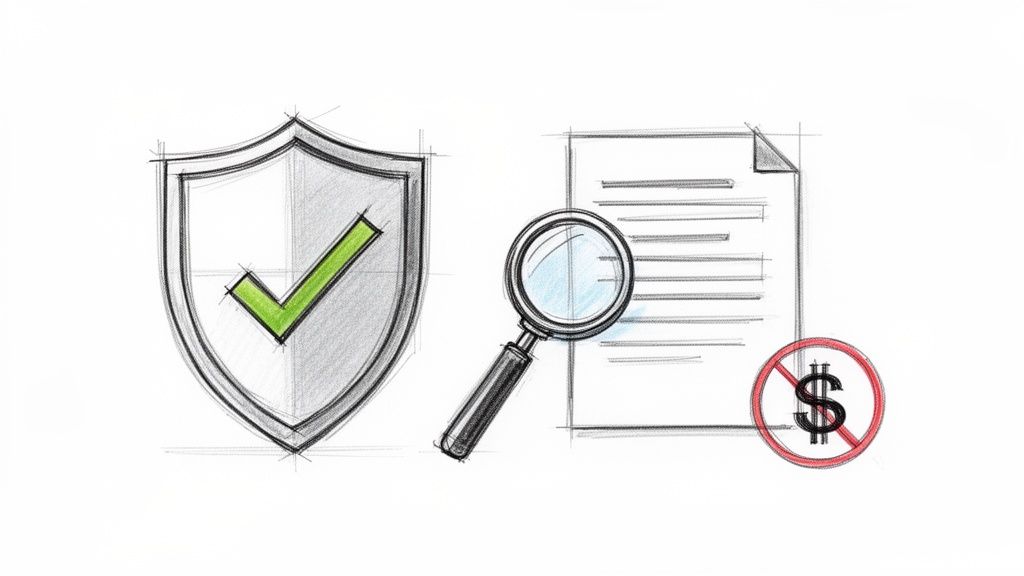
You’ll see plenty of commercial background check websites promising to find inmate information, but they can cause more problems than they solve. These sites often pull from old public records, which means you might be looking at outdated or flat-out wrong information.
Worse yet, many of them are designed to get you into a subscription with hidden fees, charging you for data that is completely free from the county.
A Critical Warning: Scammers love to target families in crisis. Be extremely cautious of unsolicited calls from anyone claiming they can get your loved one released for an upfront wire transfer or gift card payment. This is almost always a scam. A legitimate, professional bail bonds company will never use high-pressure tactics or demand payment in such a sketchy way.
If you do find information on a third-party site, always double-check it against the official county database before you do anything else.
Discretion Is Key
Protecting your own privacy during this time is just as important. When you work with a professional, licensed bail bonds company, your questions and concerns are handled with total confidentiality. We get how sensitive these situations are and make sure every conversation is kept private and discreet. Your search for answers won’t become public knowledge.
Here’s a simple breakdown to help guide you:
| Information Source | Reliability | Privacy Level | Cost |
|---|---|---|---|
| Official County Jail Site | High – Most accurate and current. | High – Searches are anonymous. | Free |
| Third-Party Background Site | Low – Often outdated or incomplete. | Low – May track and sell your data. | Often has hidden fees |
| Professional Bail Bondsman | High – Verifies info directly. | Highest – Confidential and private. | Service fee applies for bond |
Ultimately, sticking to official channels and trusted local partners is the safest and most effective path. It ensures you get the right information fast while keeping your privacy intact.
Common Questions About Finding an Inmate
Trying to navigate the jail system often brings up a flood of questions. When you're dealing with so much stress and uncertainty, getting a straight answer is what you need most. Let's tackle some of the most common concerns that come up when you're trying to find out if someone is in jail.
How Long Until Someone Shows Up in an Online Search?
This is easily one of the most frustrating parts of the process. You know an arrest happened, but the online search portal shows nothing. What gives?
Typically, you can expect a person's information to appear in a local jail's online database within 2 to 12 hours after they've been fully booked. The booking process isn't instant; it involves a few key steps:
- Fingerprinting and verifying their identity.
- Taking a mugshot.
- Entering all personal details and the alleged charges into the jail's system.
Delays are perfectly normal, especially if the jail is busy on a Friday night or over a weekend. If it's been more than 12 hours and you still can't find them online, picking up the phone and calling the jail directly is the most reliable next move.
What if the Cherokee County Jail Search Comes Up Empty?
Seeing "no results found" can feel like hitting a brick wall, but don't give up. Before you panic, take a breath and double-check the basics. Are you using their full legal name? Try searching with and without a middle initial or name. A simple typo or data entry error on their end could be the whole problem.
If that doesn't work, start thinking about other possibilities. They might be held in a smaller city jail within the county, or even in a neighboring county's facility. In the rare case of a federal charge, they wouldn't show up in local records at all. This is where a professional bail bondsman is a huge help—we can check multiple systems quickly to pinpoint their location for you.
Can I Find Charges and Bond Amounts Online?
Yes, absolutely. In most places, this is considered public information and is easy to find online. Official inmate locators, like the one for Cherokee County, almost always list the specific criminal charges and the corresponding bond amount set by the judge.
Important Note: If you see the bond amount field is blank or says "No Bond," don't assume they can't be released. It often just means a judge hasn't set the bond yet. It could also point to a more serious charge where bond was denied. The fastest way to get clarity is to call the jail or a local bondsman.
Is My Search for an Inmate Private?
This is a valid concern when you're dealing with such a sensitive situation. When you use public online databases, like a county sheriff's office website, your search is generally anonymous. These government sites don't typically track who is searching for inmate information.
However, you should be a bit more careful with third-party background check websites. Many of those commercial sites collect your data for marketing or other purposes. If you want total confidentiality, working directly with a licensed bail bondsman is the best choice. We treat every call with professional discretion to protect our clients' privacy.
When you need fast, confidential answers and a clear plan to bring someone home, don't try to navigate the system alone. The team at Cherokee Bail Bonds is available 24/7 to provide immediate assistance and expert guidance. Call us anytime for help. Learn more at https://bailbondscherokee.com.