
When a loved one gets arrested, the first and only thought is usually, "How do I get them out of jail?" This is where bail bonds come in. A bail bond is a financial promise to the court that secures someone's release from custody. Instead of coming up with the entire bail amount yourself, you pay a small portion to a bail bondsman, who then guarantees the full sum to the court.
Understanding the Bail Bond Lifeline
Let's say the court sets bail at $10,000. For most families, coming up with that kind of cash on short notice is nearly impossible. This is where a company like Cherokee Bail Bonds steps in to bridge the gap. You don't have to scramble to find $10,000; you just need to cover a small fraction of it.
Think of a bail bondsman as a specialized cosigner for a very important loan—a loan for someone's freedom. The court is the lender, and the defendant's release from jail is the "loan." By posting the bond, the bondsman is essentially telling the court, "I trust this person to show up for their hearings, and I'm putting my own money on the line to prove it."
This system serves two critical purposes:
- It makes freedom affordable. Bail bonds give families a way to secure a release that would otherwise be financially out of reach.
- It keeps the justice system moving. By ensuring defendants appear in court, bail bonds help the legal process run smoothly and efficiently.
Bail vs. Bond: What Is the Difference?
People often use the terms "bail" and "bond" as if they mean the same thing, but they are two very different parts of the process. Understanding the distinction is key.
Bail is the total cash amount the judge sets for a defendant's release. A bond is the guarantee from a bail bond company to pay that full amount if the defendant doesn't show up for court. You can explore this topic in more detail in our guide on the differences between bail and a bond.
A bail bond is really just a contract. The defendant's family pays a non-refundable fee, and in exchange, the bail bond company takes on the full financial risk of making sure the defendant meets their legal obligations.
The bail bond process can seem complex at first, but it breaks down into a few key steps.
Bail Bond Process At a Glance
This table shows how the key players and steps fit together, using a real-world example to make it clear.
| Concept | What It Means | Example for a $10,000 Bail |
|---|---|---|
| Bail Amount | The full sum of money set by the court to ensure the defendant's appearance. | $10,000 |
| Bond Premium | The non-refundable fee you pay to the bail bondsman (usually 10-15% in Georgia). | $1,000 to $1,500 |
| Surety Bond | The formal guarantee the bondsman gives to the court for the full bail amount. | The bondsman posts a $10,000 bond with the court. |
| Your Responsibility | Ensure the defendant attends all court dates until the case is over. | The defendant shows up to every single hearing. |
| Case Resolution | The bond is dissolved once the case ends, and the bondsman's obligation is cleared. | The $10,000 guarantee is no longer active. |
Understanding these terms helps demystify what happens from the moment bail is set to the final court date.
The Core Agreement
When you get a bail bond, you're signing a legal agreement. You pay a premium, which in Georgia is typically between 10% and 15% of the total bail. For that $10,000 bail, your fee would be between $1,000 and $1,500. This fee is non-refundable; it pays the bondsman for taking on the risk and for the service of getting your loved one released.
Once the fee is paid and the paperwork is complete, the bondsman posts a "surety bond" with the court for the full $10,000. The jail then processes the defendant's release. From that moment on, the defendant's most important job is to attend every single court date. As long as they do that, the bond is dissolved when the case is over, and the bondsman's financial promise to the court ends. It's a simple but powerful system that forms the foundation of the bail process here in Cherokee County and across the country.
The Bail Process From Arrest to Freedom
It's tough to know what to do when you get that call. But understanding the journey from the moment of arrest to the relief of coming home can make all the difference. The legal system can feel confusing and intimidating, but the bail process itself follows a clear, predictable path.
It all starts with an arrest. The individual is taken to a local facility like the Cherokee Adult Detention Center for booking. During this time, officials record personal information, take fingerprints and a mugshot, and formally document the alleged charges.
The Bail Hearing and Setting the Amount
After booking, the defendant has a bail hearing, sometimes called a "first appearance." This is where a judge reviews the charges and decides if bail is appropriate. The entire point of bail is to make sure the defendant shows up for all their future court dates.
A judge doesn't just pull a number out of thin air. They weigh several key factors:
- Severity of the Alleged Crime: Serious charges like felonies will almost always have a higher bail amount than misdemeanors.
- Defendant's Criminal History: A record of prior convictions can signal a higher risk, often resulting in a larger bail.
- Ties to the Community: Things like a steady job, family living in Cherokee County, and being a long-term resident can work in the defendant's favor.
- Flight Risk Assessment: The judge has to consider the likelihood that the person might flee to avoid facing their charges.
Once the judge sets the amount—say, $20,000—you have a choice. You can pay the full cash amount directly to the court, or you can work with a bail bondsman. For most families, the second option is the only realistic one.
Making the Call to a Bondsman
This is the moment things start moving in the right direction. When you call a professional bail bonds company, you're not just a name on a form; you're getting a partner who can turn a crisis into a clear plan of action.
To get started, the bondsman will just need some basic information:
- The defendant's full legal name.
- The jail where they're being held (like the Cherokee Adult Detention Center).
- The charges they are facing.
- The total bail amount set by the judge.
With these details, the bondsman can get the paperwork started immediately. The core of the transaction is simple: the court sets bail, you pay a small fee to the bondsman, and the bondsman then guarantees the full amount to the court.
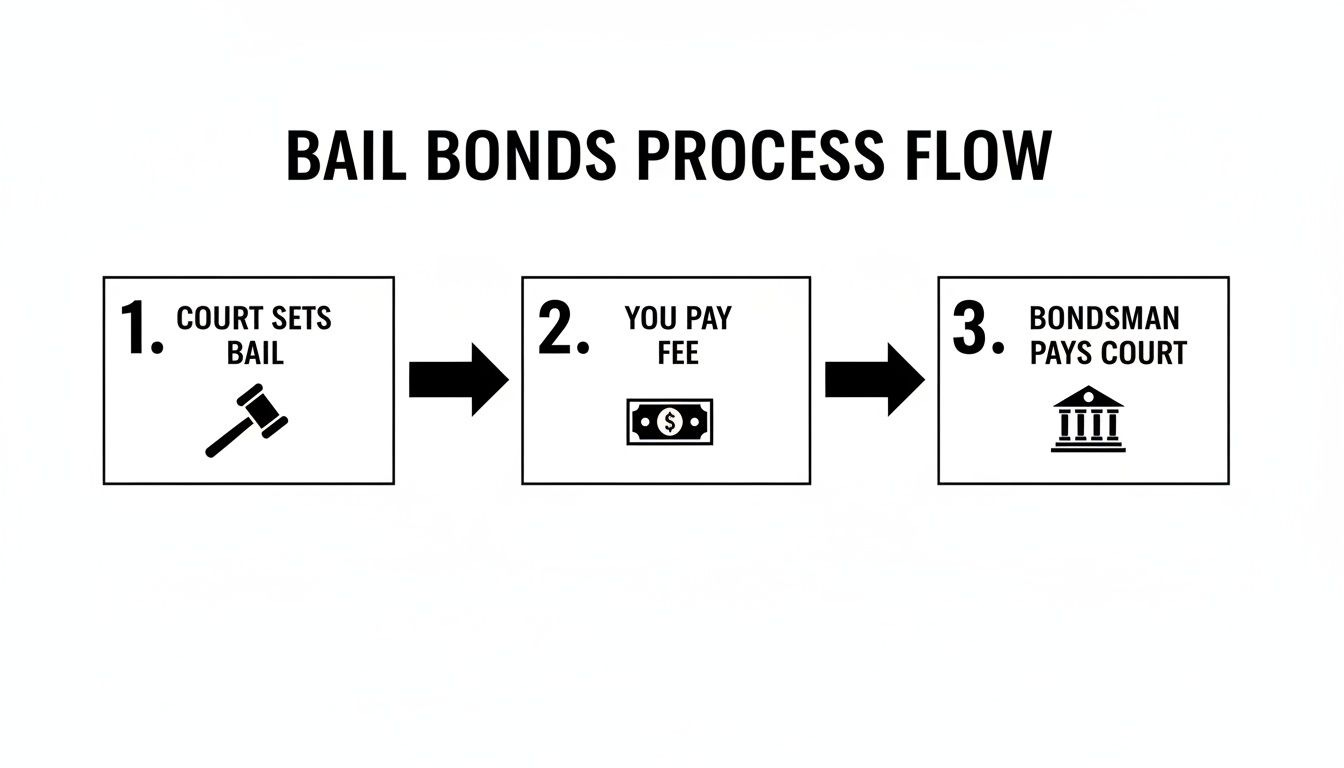
This simple exchange makes an unaffordable bail amount manageable, giving you a path forward when you need it most.
Paperwork and Posting the Bond
Next comes the paperwork. You'll complete a bail bond agreement, which is a straightforward contract between you (the "cosigner") and the bail bond company. By signing, you are making a financial promise that the defendant will show up for court.
You'll also pay the non-refundable fee, which is a percentage of the total bail. As soon as the paperwork is signed and the fee is paid, the bondsman gets to work. They head to the jail or courthouse to "post" the bond, which involves submitting a surety bond to the court that guarantees the full bail amount.
The moment a bondsman posts the bond, their financial liability begins, and the jail's release process is initiated. This is the service you are paying for—the assumption of risk and the professional handling of legal and financial documents to secure a swift release.
Once the bond is posted, the jail staff starts the discharge process. The exact time it takes to get released can vary based on how busy the facility is, but it's usually just a few hours in Cherokee County. A good local bondsman knows the system and can give you a realistic idea of the timeline.
For a deeper dive, you can learn more about how bail bonds work in Cherokee County, GA, and what to do after an arrest. Knowing exactly what to expect turns a confusing process into a series of manageable steps.
Decoding the Costs, Fees, and Collateral
Let's talk about the financial side of things. When you’re trying to get someone out of jail, understanding the costs involved is crucial. It’s a lot more straightforward than most people think, and there are no hidden surprises.
The main cost you’ll encounter is the bail bond premium. Think of it as the service fee you pay the bail bond company for their help. This fee is non-refundable, and for a good reason—it covers the bondsman for taking on the full financial risk of the bail and for getting your loved one released quickly.
Calculating the Bail Bond Premium
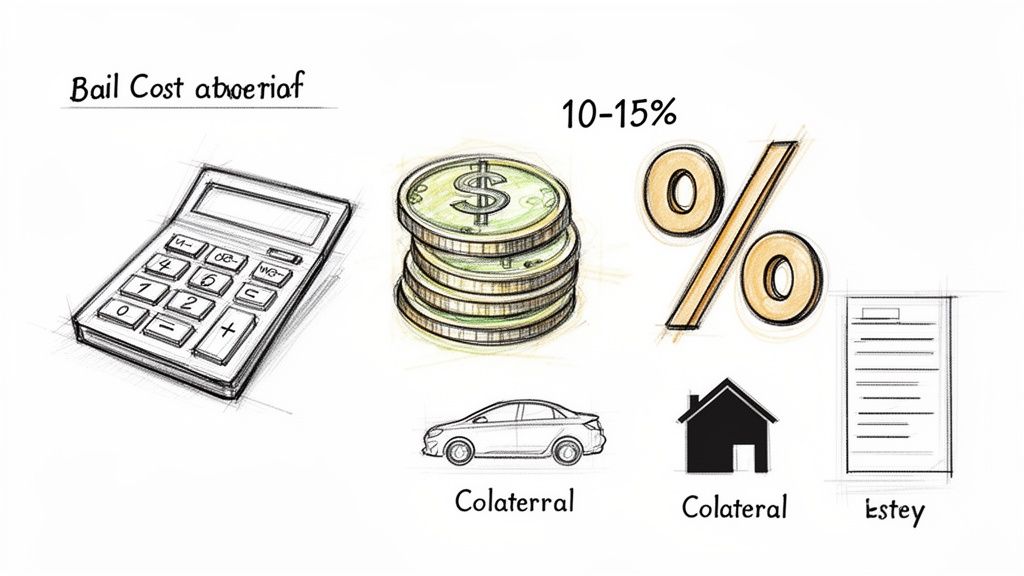
In Georgia, the premium is simply a percentage of the total bail amount, usually between 10% and 15%. This rate is regulated, so you know you’re getting a fair shake.
Here’s how the math breaks down in a couple of real-world scenarios:
- For a $5,000 Bail: The premium would be between $500 and $750. You pay this one-time fee, and we handle the rest.
- For a $50,000 Bail: Instead of coming up with $50,000 in cash, you’d pay a premium between $5,000 and $7,500.
This is what makes getting out of jail affordable for most families. When you work with a bondsman, you pay that small percentage, and they guarantee the full bail amount to the court. As long as the defendant shows up for all their court dates, everyone’s obligation is met.
The premium is the core of the transaction. It's the fee that transfers the financial risk from you to the bail bond company, allowing them to post the entire bail amount on your behalf.
We know that even paying the premium can be a strain. That’s why we work with families to find solutions. Ask us about our flexible bail bonds payment plans that can ease the immediate financial burden.
What About Collateral?
Sometimes, for larger or riskier bonds, the premium alone isn't enough. That's where collateral might come in. Think of it as a security deposit—it’s not a fee, but a temporary guarantee.
Collateral gives the bondsman an extra layer of security in case the defendant doesn’t show up for court. It’s not always needed, but you might be asked for it in certain situations, like:
- Very high bail amounts
- A defendant with a history of missing court
- Someone considered a flight risk
The most important thing to know is that collateral is 100% refundable. Once the case is closed and all court appearances have been made, you get your collateral back. Simple as that.
Common forms of collateral include:
- Property Deed: Title to a house or land.
- Vehicle Title: The "pink slip" for a car, truck, or boat.
- Valuables: Jewelry, electronics, or other items with verified value.
- Cash: A cash amount held safely until the case is over.
Our goal is to make sure you’re comfortable and informed every step of the way. By understanding the non-refundable premium and the purpose of refundable collateral, you can navigate the financial side of bail with confidence.
Your Responsibilities After Posting Bond
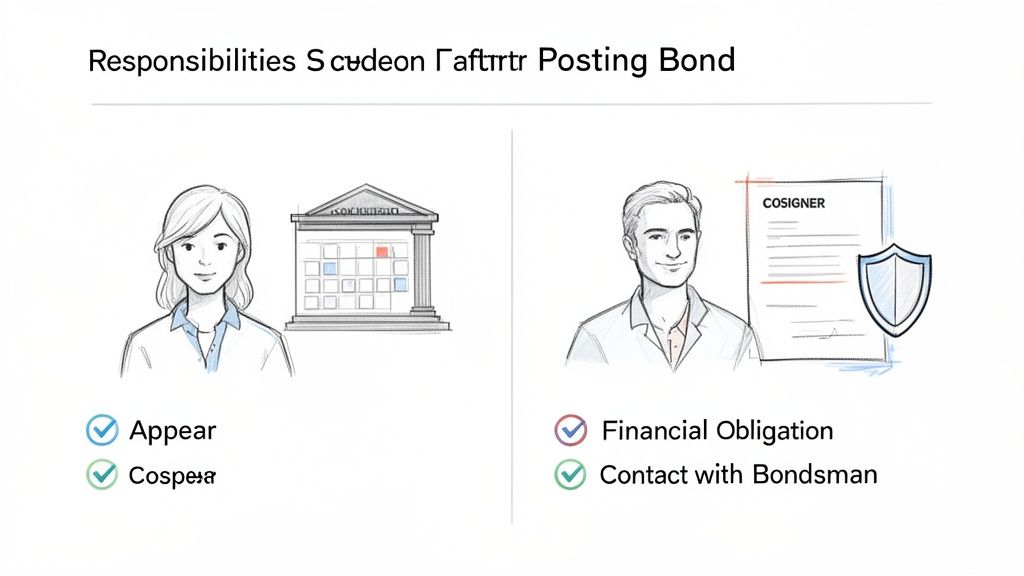
Getting out of jail is a huge relief, but it’s definitely not the end of the story. Posting bond is really just the beginning of a crucial period where both the defendant and the cosigner have important jobs to do. Think of it as a conditional release—that freedom comes with a very clear set of rules.
Following these rules is everything. For the defendant, it means staying out of jail and having the freedom to build a strong defense. For the cosigner, it’s about protecting their money and any collateral they put up. This is a partnership built on trust and the shared goal of seeing the legal process through to the end.
The whole bail bond system hinges on this cooperation. When everyone does their part, the defendant stays free, and the cosigner is kept safe from a major financial hit.
The Defendant’s Core Duties
For the person who was just released, the obligations are straightforward and non-negotiable. That legal agreement signed with the bail bond company is a serious promise. Failing to keep it has immediate consequences, including a trip right back to jail.
The most important rule is simple: show up to every single court date. Missing an appearance, even for what seems like a minor hearing, is the fastest way to get your bond revoked and have a warrant issued for your re-arrest. It's the absolute foundation of the entire bail agreement.
Beyond just showing up, a few other standard conditions usually apply:
- Stay in Touch: You have to maintain regular contact with your bail bondsman. This might mean weekly check-in calls or just being responsive if they reach out.
- Avoid New Trouble: Getting arrested for another crime while you're out on bond is a huge violation. It tells the court you might be a risk to the community.
- Follow Court Orders: The judge might set specific rules like no-contact orders, travel restrictions, or mandatory counseling. You have to follow these to the letter.
The Cosigner’s Financial Guarantee
The cosigner, who is often a family member or a close friend, has a vital role. By signing that bail bond agreement, they become the financial backstop for the defendant. This is a massive responsibility that should never be taken lightly.
Basically, the cosigner is telling the bail bond company, "If the defendant disappears, I will pay the full bail amount." This means if bail was set at $20,000, the cosigner is legally on the hook for that entire sum if the defendant skips court and can't be found.
The cosigner's role is more than just helping a loved one; it's a legal and financial commitment. Their involvement is often the deciding factor that encourages a defendant to fulfill their court obligations, knowing a trusted person’s financial well-being is at stake.
This accountability is a big reason why the bail bond system is so effective. The industry has a high success rate, with an estimated 85-90% of bonds being cleared without any problems and forfeitures staying under 2%. This is largely thanks to the proactive work of bondsmen and recovery professionals. You can learn more about the global market size and success rates of bail bond services.
When the defendant and the cosigner both clearly understand their roles, they can work together to ensure a smooth process all the way from release to the final resolution of the case.
What Happens When Someone Skips Bail
Getting out of jail on a bail bond is a huge relief, but it comes with one hard and fast rule: the defendant has to show up for every single court date. When that doesn't happen—a situation known as "skipping bail" or "jumping bond"—it triggers a chain reaction with serious consequences for everyone involved.
The moment a defendant is a no-show, the judge acts immediately. The court issues a bench warrant for their arrest, which means any law enforcement officer can take them back into custody on the spot. At the same time, the bail bond is forfeited.
The Immediate Financial Fallout
A bond forfeiture puts the bail bond company in a tough spot. The court gives them a short window of time, a grace period, to either find the defendant and get them back to jail or pay the full bail amount. This is where things get very real for the cosigner.
The person who cosigned for the bond is now on the hook for the entire bail amount. If bail was set at $20,000, that’s what the cosigner legally owes the bail bond company. This isn't just a verbal agreement; it's a binding contract that can lead to the seizure of any collateral that was pledged, like a car title or property.
The Role of Bail Recovery Agents
Bail bond companies don’t just accept the loss and write a check to the court. To avoid paying the full forfeiture, they bring in bail recovery agents—you might know them as bounty hunters—to track down and apprehend the defendant. These are professionals skilled at finding people who don't want to be found.
Their job is to get the defendant back into court custody before the grace period runs out. When they succeed, the bond forfeiture is usually set aside, which is a massive relief for the cosigner. However, the cosigner will still have to cover any costs the recovery agent charged for their services.
We explain all this not to scare you, but to make sure you understand just how serious a bail agreement is. A professional bondsman at Cherokee Bail Bonds works hard to prevent this from ever happening. We stay in touch, send court reminders, and make sure everyone knows their responsibilities from day one.
Ultimately, skipping bail turns a difficult but manageable situation into a legal and financial nightmare. It leads to new criminal charges for failure to appear, a guaranteed loss of the bond premium and any collateral, and a crushing financial burden for the cosigner who put their trust on the line.
How a Local Bondsman Can Help You Right Now
When a crisis hits, theory goes out the window. You need to turn what you know about bail bonds into immediate, practical action. More than anything, you need a calm, experienced guide who knows the local system inside and out. This is where a professional bondsman becomes your most important phone call.
At Cherokee Bail Bonds, we're here to provide fast, confidential, and professional service 24/7. Our team serves every part of Cherokee County—from Canton and Woodstock to Ball Ground and Waleska—making sure help is always just a phone call away.
Local Expertise Makes the Difference
Our deep local roots mean we have established relationships and a complete understanding of the procedures at facilities like the Cherokee Adult Detention Center. This isn't just a small detail; it allows us to cut through the red tape, streamline the paperwork, and post the bond with maximum efficiency. We can significantly reduce the time your loved one spends in custody by turning confusion into a clear, manageable plan.
The bail bond industry has come a long way from its beginnings in the 1830s. Today, a modern firm like Cherokee Bail Bonds uses online applications and direct portals with local jails to process bonds in under an hour. This speed is part of a nationwide industry that handled over $20 billion in annual premiums by the 2020s. You can discover more insights about the bail bond services market on ibisworld.com.
When you need help, you need it now. A local bondsman doesn't just process a transaction; they provide compassionate guidance and support during one of life's most stressful moments.
If you or someone you know needs immediate help, don't wait. A licensed professional is standing by to take your call and get the process started.
- Call Us Immediately: (770) 224-9150
- Visit Our Office: 2920 Marietta Hwy, Unit 106, Canton, GA 30114
Common Questions About the Bail Bond Process
When you're dealing with an arrest, it's natural to have questions. The stress of the situation can make everything feel confusing, but getting clear answers is the first step toward taking control. We've put together some straightforward answers to the questions we hear most often to help you feel more prepared.
Think of this as a quick guide to clear up the confusion. Knowing the answers helps you move forward quickly and confidently.
How Long Does Release Take After Posting Bond?
This is usually the first thing on everyone's mind. Once the paperwork is handled and the premium is paid, we immediately file the bond with the jail. From that point on, the timing is really in the hands of the jail staff.
In Cherokee County, you can typically expect the release process to take between 1 to 4 hours. It all depends on how busy the facility is. Our 24/7 availability and years of experience with the local jail procedures mean we get things moving as fast as humanly possible on our end.
Is the Premium Fee Refundable if Charges Are Dropped?
No, the premium you pay is a non-refundable fee for our service, and it’s important to understand why. It’s best to think of it like an insurance premium. It covers the major financial risk we take by guaranteeing the full bail amount to the court, plus the professional work involved in securing the release.
The premium is earned the moment we post the bond and get your loved one released. It’s non-refundable no matter how the case ends—whether charges are dropped, reduced, or the defendant is found not guilty.
That fee pays for the immediate service we provide and covers the liability we carry from the second the bond is posted until the case is officially closed.
What Is the Difference Between a Cash Bond and a Surety Bond?
Both get someone out of jail, but they work very differently. The main distinction is who pays the court and how much money is required upfront.
- Cash Bond: This means you have to pay the full bail amount directly to the court in cash. If bail is set at $10,000, you have to come up with $10,000. That money is returned to you (minus any court fees) only after the defendant has shown up to all their court dates.
- Surety Bond: This is what we do. Instead of paying the full amount, you pay us a much smaller percentage (the premium). We then post a bond guaranteeing the entire bail amount to the court. It makes getting out of jail far more affordable.
A surety bond lets you use our financial strength to meet the court’s demands without having to wipe out your own savings account.
Can I Get a Bail Bond for Any Criminal Charge?
For the most part, yes. Bail bonds are available for a huge range of criminal charges, from misdemeanors like traffic offenses all the way up to serious felonies. If a judge sets a bail amount, we can almost always post a bond to secure a release.
However, the judge always has the final say. For very severe crimes, or if the defendant is considered a major flight risk or a danger to the public, a judge can deny bail completely. In these "no-bond" cases, the defendant has to stay in jail until their trial. We can tell you right away if the charge your loved one is facing is bondable.
Navigating the bail process can feel overwhelming, but you don't have to do it alone. At Cherokee Bail Bonds, our licensed professionals are available 24/7 to answer your questions and guide you every step of the way. If you need fast, reliable help in Cherokee County, call us immediately at (770) 224-9150 or visit our website to learn more at https://bailbondscherokee.com.