
When someone gets arrested in Cherokee County, the first thing on everyone's mind is getting them out of jail. The words “bail” and “bond” get thrown around a lot, and it’s easy to think they mean the same thing. They don't. Understanding the difference is the most important first step you can take in a stressful situation.
At its core, the difference between bail and bond is all about who you pay and how you pay it.
Understanding Your Release Options in Cherokee County
Think of bail as a financial promise to the court that the defendant will show up for their hearings. If you have the cash on hand, you can pay the full bail amount directly to the court. This is called cash bail.
The problem is, bail can be set at thousands or even tens of thousands of dollars. Most families simply don't have that kind of money available. That's where a bail bond comes in. A bail bond is a much more affordable and practical path to getting someone released.
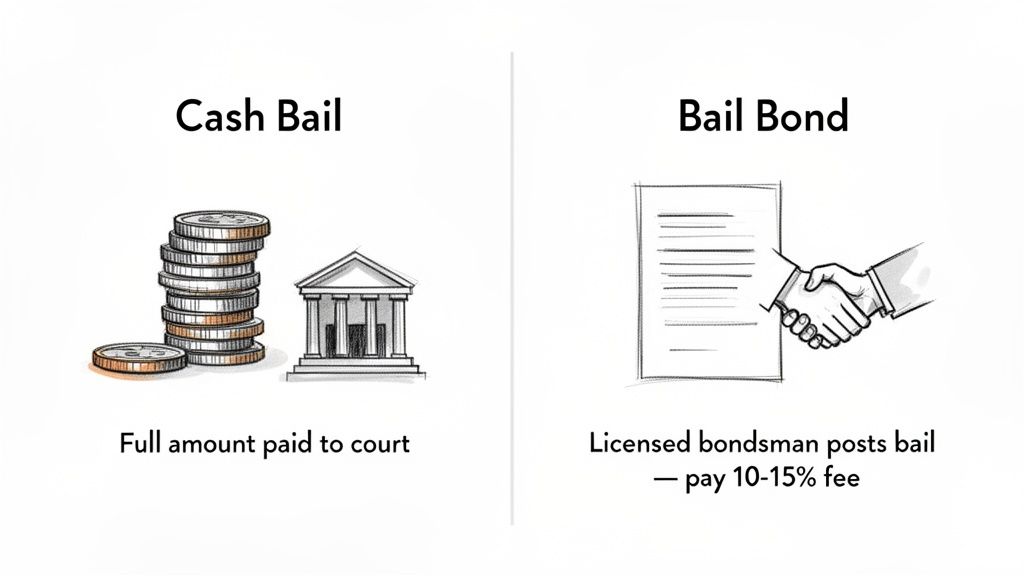
Bail vs Bond at a Glance
So, what's the right choice? One option requires a huge upfront payment that you might get back, while the other involves a smaller, non-refundable fee for a professional service. Let's break it down.
For a more detailed explanation, you can always learn more about bail bonds and see why it's the most common solution.
Here’s a simple table to see the two side-by-side:
| Aspect | Cash Bail | Bail Bond |
|---|---|---|
| Who Gets Paid | The full amount is paid directly to the court system. | A non-refundable fee is paid to a bail bonds company. |
| Upfront Cost | 100% of the bail amount. For a $10,000 bail, you pay $10,000. | Typically 10-15% of the bail amount. You pay the bondsman $1,000-$1,500. |
| Refundability | The full amount is returned (minus court fees) if you attend all hearings. | The fee paid to the bondsman is non-refundable. It is their service charge. |
| Financial Risk | You risk losing the entire bail amount if a court date is missed. | The bondsman assumes the financial risk of the full bail amount with the court. |
The key takeaway is that a bail bond company takes on the massive financial risk for you. You pay a small fraction of the total bail, and the bondsman guarantees the full amount to the court, making a quick release affordable and possible.
How Cash Bail Works in Georgia
When it comes to getting someone out of jail in Georgia, paying cash bail is the most direct route. It’s exactly what it sounds like: a full, upfront payment to the court that acts as a financial promise that the defendant will show up for their hearings.
You can think of it as a security deposit held by the legal system. When a judge in Cherokee County sets bail, they aren't issuing a fine or a punishment. Instead, they're setting a specific dollar amount designed to ensure the defendant takes their court dates seriously.
How is the Bail Amount Decided?
Judges don’t just pull a number out of thin air. They perform a careful risk assessment based on the specifics of the case and the individual. The final bail amount is a calculated decision.
Key factors that come into play include:
- The Seriousness of the Charge: A felony charge will almost always carry a much higher bail amount than a misdemeanor.
- The Defendant's Criminal History: If the person has a history of prior offenses, the judge may see them as a higher risk and set a more substantial bail.
- Flight Risk Assessment: The court will look at the defendant's ties to the community. Do they have a job and family in Canton or Woodstock? Or is there a real chance they might leave the area to avoid court?
- Public Safety Concerns: If the alleged crime was violent or the defendant is seen as a potential threat to the community, the bail will be set high enough to prioritize safety.
It's a common myth that bail is a penalty. Its only legal purpose is to make sure the defendant appears in court. The money is supposed to be returned once the case is over.
The Reality of Paying Cash Bail
While the concept is simple, the practical side of paying cash bail can be a nightmare for many families. To get someone released, you or your family must deliver the entire bail amount in cash or with a cashier's check to the Cherokee County Adult Detention Center. If bail is $15,000, you need to hand over $15,000.
This is where the real-world pressure hits. Families are often forced to drain their savings accounts, sell a car, or ask relatives for money just to get a loved one home. The financial stress is immediate and can be devastating.
If the defendant makes it to every single court date, the cash bail is refunded at the conclusion of the case (minus some court fees or fines). But if just one court appearance is missed, the entire amount is lost for good, and the court issues a warrant for the defendant’s arrest. It's a high-stakes gamble that most families simply can't afford to take.
How Bail Bonds Provide an Immediate Solution
When a judge sets a high cash bail, it can feel like an impossible mountain to climb. That's where a bail bond offers a practical, immediate way forward. It’s not just about handing over money; it's a formal agreement between the court, the defendant, and a licensed bail bond agency that gets your loved one home quickly by shifting the financial risk away from your family.
Instead of trying to find the entire bail amount, you pay a bail bondsman a non-refundable fee, which is just a fraction of the total. In Georgia, this premium is typically between 10-15%. This is the bondsman's fee for their service and for taking on the full financial liability with the court.
The Key Players in a Bail Bond Agreement
The bail bond process hinges on two essential roles working together to secure a release from jail. Once you understand who does what, it's easy to see why this is such a common and effective solution.
-
The Bail Bondsman (Surety): The bondsman is essentially a financial guarantor for the court. By posting the bond, they're making a promise that the defendant will show up for every required court date. If the defendant doesn't appear, the bondsman is on the hook for the entire bail amount.
-
The Cosigner (Indemnitor): This is usually a close friend or family member who signs the bail bond contract. The cosigner guarantees the defendant will meet their court obligations and agrees to cover the full bail amount if the defendant skips town.
This partnership is what protects your personal assets. It means you don't have to drain your savings or sell property to get someone out of jail, because the bondsman provides the financial backing. For a closer look at the nuts and bolts, check out our guide on how bail bonds work in Cherokee County, GA.
When you hire a bondsman, you’re not just paying for a key to a jail cell. You're bringing in a professional ally who knows the local system inside and out and has a direct financial stake in making sure the defendant makes it to court.
The concepts of bail and bonds have changed a lot over the years. Bail started as a simple promise backed by friends, with no cash involved. Today, the commercial bond system is what most people rely on. In fact, between 1990 and 2009, the use of commercial bonds for felony cases nearly doubled, jumping from 24% to 49% of all releases as bail amounts skyrocketed.
This shift is precisely why understanding the difference between bail and bond is so critical today. A professional bondsman provides a modern-day answer to an increasingly expensive problem.
Comparing Costs, Collateral, and Consequences
Choosing between posting the full cash bail and securing a bail bond involves more than just looking at the initial price tag. The real difference between the two becomes crystal clear when you dig into the long-term financial impact, what you have to put on the line as security, and what happens if things go sideways.
Making the right call really depends on your specific situation.
The Upfront Financial Hit
The most immediate factor is what you have to pay right now. With cash bail, you're on the hook for 100% of the set amount. If bail is set at $10,000, that means you need to hand over a full $10,000 to the court. While you get that money back once the case is over, it ties up a massive amount of cash—something that can be financially crippling for most families.
A bail bond, on the other hand, works differently. You only pay a non-refundable premium, which is typically 10-15% of the total bail. For that same $10,000 bail, you’d pay a bondsman a fee of $1,000 to $1,500. This is their fee for taking on the full financial risk for you. For many people, flexible bail bonds payment plans make even this smaller amount totally manageable.
This decision is one of the first and most critical steps after an arrest. This flowchart breaks down the initial choice you'll face between using your own cash or getting professional help.
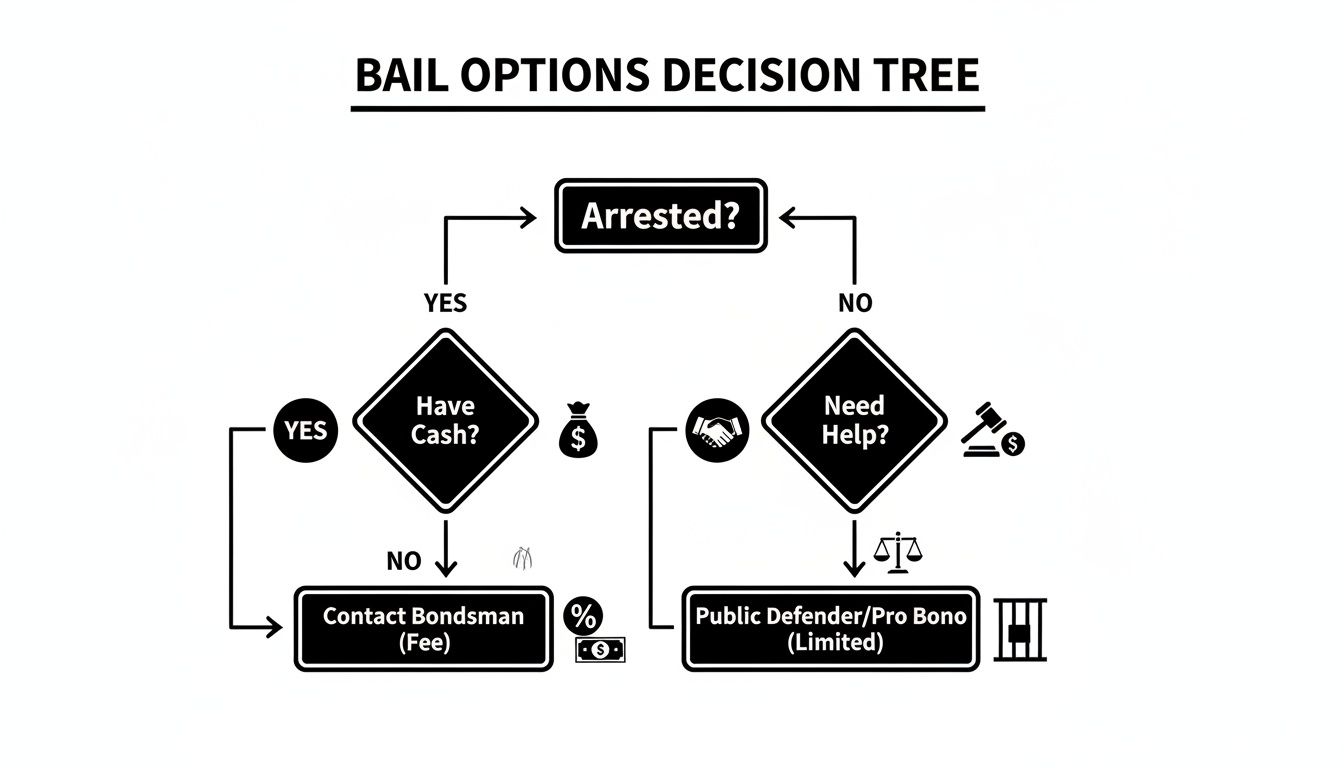
As the flowchart shows, the path you take is often determined by your immediate financial resources, guiding you toward either paying the court directly or working with a bonding agency.
The Role of Collateral
Collateral is another huge point of difference. When you pay cash bail, that money is the collateral. The court holds your funds as its guarantee. As long as the defendant shows up for every court date, the cash is returned. Simple as that.
When you get a bail bond, the bondsman is the one taking the risk. To protect their guarantee to the court, they might require you to pledge collateral. This could be a car title, property, or another valuable asset. It isn't always needed for smaller bonds, but it becomes more common as the bail amount goes up.
The key takeaway is this: with cash bail, your liquid assets are tied up. With a bail bond, you can often secure a release using non-liquid assets as a guarantee, which keeps your cash free for other critical needs.
What Happens If a Court Date Is Missed?
The fallout from a missed court date is always serious, but it plays out very differently depending on which option you chose. If you paid cash bail and the defendant doesn’t show up, the court simply keeps the entire amount. Your $10,000 is gone for good, and a warrant is issued for the defendant's arrest.
If you used a bail bond, the bondsman is now responsible for paying the full bail amount to the court. They will then use their own resources to find the defendant and get them back to court. If they can't, they will use the collateral you pledged to cover their loss. A bondsman has a powerful financial incentive to make sure the defendant complies.
To help you see the differences side-by-side, here’s a quick breakdown of how cash bail and bail bonds stack up against each other.
Detailed Comparison of Bail and Bond
| Criteria | Cash Bail | Bail Bond |
|---|---|---|
| Upfront Cost | You pay 100% of the total bail amount. | You pay a 10-15% non-refundable fee. |
| Financial Impact | Ties up a large amount of your liquid cash. | Preserves your cash for other expenses. |
| Refunds | The full amount is refundable after the case. | The fee is non-refundable; it’s the cost of the service. |
| Collateral | The cash itself is the collateral. | May require assets like property or a vehicle title. |
| Missed Court Date | The court seizes 100% of the money you paid. | The bondsman forfeits the bond and may seize your collateral. |
| Accountability | The defendant and their family hold all responsibility. | The bondsman has a strong financial stake in ensuring appearance. |
This table makes it easy to see the trade-offs. While cash bail offers a full refund, it demands a significant upfront payment that most people simply don't have. Bail bonds provide an affordable path to release, shifting the financial risk away from your family.
This huge difference in accessibility is why national trends have shifted so dramatically. With the median felony bail often being more than what a person earns in a year, paying cash bail is out of reach for countless families. It's no surprise that between 1990 and 2009, the use of bail bonds for felony cases shot up from 24% to 49%.
Navigating the Release Process in Cherokee County
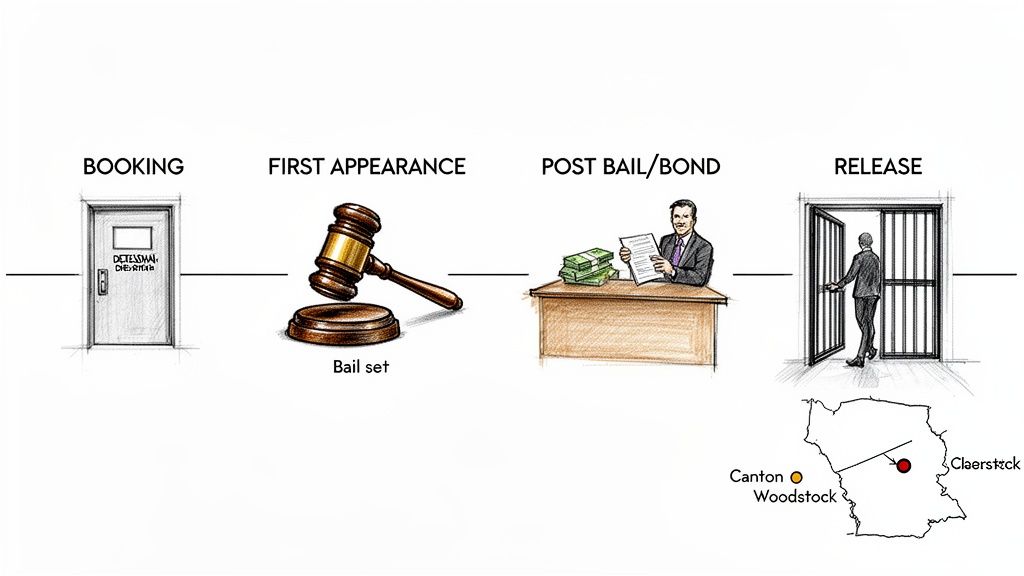
When an arrest happens in Cherokee County, everything can feel chaotic and out of control. Understanding the actual step-by-step process—from Canton to Woodstock—is the first step toward regaining some clarity during a deeply stressful time.
The whole thing kicks off at the Cherokee County Adult Detention Center, where the booking process starts. This is where they'll do the fingerprinting, take a mugshot, and create the official arrest record. After booking, the defendant has to wait for their first appearance hearing, which almost always happens within 24 to 48 hours. This hearing is crucial, as it’s where a judge will formally set the bail amount based on the charges and other factors.
Posting Bail or a Bond
Once that bail amount is set, you have a choice to make. You can either pay the entire cash bail amount directly to the court, or you can get in touch with a bail bond company. This is where knowing the real-world difference between bail and bond becomes so important for making a quick, smart decision.
Posting a bond involves some specific paperwork and coordination with the jail. The bond paperwork itself is often done in less than an hour, but the actual release depends on how quickly the detention center can process everything. Honestly, that part can take several hours.
A knowledgeable local bondsman can make all the difference. Their familiarity with the Cherokee County court system, the jail staff, and the specific procedures can help you sidestep common delays and get your loved one home much faster.
The Advantage of Local Expertise
Trying to figure all this out on your own is daunting. A local bondsman does way more than just put up the money; they act as your guide through every single step. They know exactly which forms are needed, who to talk to at the jail, and how to sort out any little snags that might pop up.
That local experience gives you more than just speed—it gives you peace of mind. Instead of fumbling through a confusing system by yourself, you have a professional on your side making sure everything is handled correctly and efficiently. That kind of support is invaluable when you need it most.
Answering Your Questions About Bail and Bonds
Navigating the legal system, especially for the first time, brings up a lot of urgent questions. When you're trying to help a loved one get out of jail, you need clear, straightforward answers—fast. We've gathered some of the most common concerns families in Cherokee County have when they first encounter the bail and bond process.
What If I Cannot Afford the Bond Fee?
One of the first things that comes to mind for most families is the cost. Even though a bond premium is just a fraction of the full bail amount, it can still feel like a significant and unexpected expense. This is a completely understandable worry.
Reputable bail bondsmen know that an arrest throws a wrench into a family's finances. That's why many of us offer flexible payment plans or financing options to make getting your loved one out of jail manageable. Our primary goal is to secure their release, not to create a financial crisis for you.
The best thing to do is just have an honest conversation about your financial situation. A professional bondsman can often work with you to find a solution that fits, based on the specifics of the case, the bond amount, and the cosigner's qualifications. Don't just assume you can't afford it without talking it through first.
How Long Does Release Take in Cherokee County?
Another critical question is always, "How long until they are home?" It’s important to have realistic expectations here, because the process involves more than just the bondsman's paperwork. While we can often get the bond agreement completed in under an hour, the actual release from jail is in the hands of the facility's staff.
The Cherokee County Adult Detention Center has its own internal procedures for processing releases. Once we officially post the bond, jail staff have to complete their verification and discharge process, and the time this takes can vary a lot.
On a quiet day, a release might happen in just a couple of hours. But if the jail is busy processing new arrests or is in the middle of a shift change, it could easily take several hours longer. A local bondsman who knows the facility can give you a pretty good estimate based on current conditions, but the final timing is always up to the jail's workload.
A common misconception is that paying a bondsman instantly opens the jail cell door. In reality, the bondsman completes their part quickly, but the final release is subject to the jail’s operational pace.
Is the Bond Premium Refundable If Charges Are Dropped?
This is one of the most important things to understand about the difference between bail and bond. When you work with a bail bond company, the premium you pay—typically 10-15% of the total bail—is a non-refundable fee for our service.
Think of it like paying any other professional. The bondsman earns that fee by taking on the full financial risk with the court and guaranteeing the defendant will show up for their hearings. That service is considered complete the moment the bond is posted and your loved one is released from custody.
Because of this, the outcome of the legal case doesn't affect the fee you paid. Whether the charges are eventually dismissed, reduced, or go to trial, the premium is not returned. This is the key tradeoff compared to posting cash bail, where the full amount is refunded by the court (minus fees) after the case is over. The bond premium is the price you pay to avoid tying up thousands of dollars of your own money.
When you need clear answers and fast, professional help during a difficult time, Cherokee Bail Bonds is here for you 24/7. We know the local system inside and out and are dedicated to guiding you through every step with respect and efficiency. If you need immediate assistance in Canton, Woodstock, or anywhere in Cherokee County, call us now at 770-224-9150 or visit our website to learn how we can help.